Medical cannabis is often discussed in broad terms, with some presenting it as a cure-all while others focus almost entirely on the potential risks associated with it. But for science-trained professionals, the field isn’t broken into categories of “good” or “bad.” Instead, they focus on what the science actually shows.
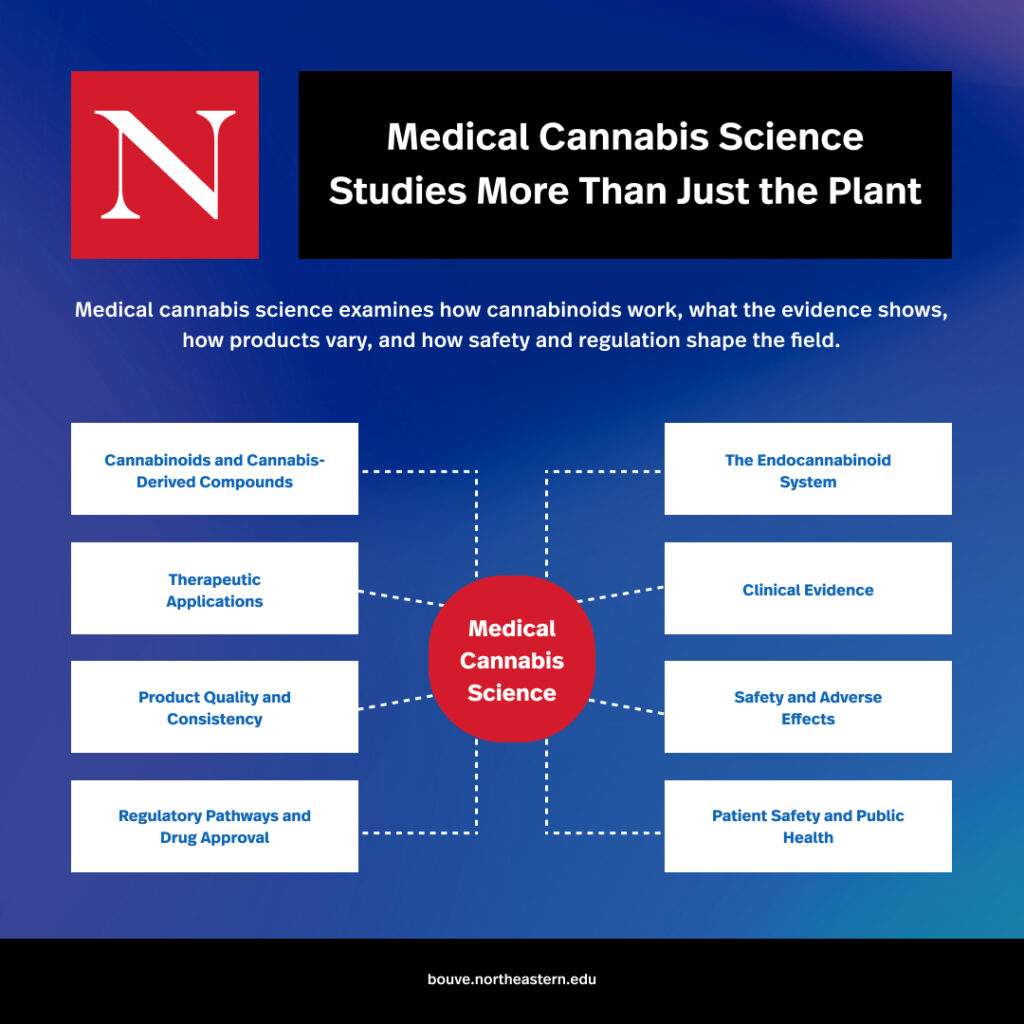
If you’re seeking to enter the medical cannabis science field, you’ll study how cannabis, cannabinoids, and cannabis-derived compounds interact with the body, including the endocannabinoid system, therapeutic applications, product quality, patient safety, clinical evidence, and regulatory considerations. You’ll need to understand both the potential and the limitations of cannabis research, as the evidence varies by condition, compound, dose, route of administration, product quality, and patient population.
All of this can make the field more complex than consumer-facing cannabis education or patient guidance. Medical cannabis science doesn’t focus on, say, helping someone obtain a medical cannabis card. Instead, it examines everything from biological mechanisms to the regulatory frameworks, which shape how cannabis and cannabis-derived products are studied.
As medical cannabis research continues to evolve, the field increasingly needs people who can evaluate claims, understand evidence, communicate responsibly, and apply scientific rigor to an industry where both enthusiasm and uncertainty remain high.
What Is Medical Cannabis Science?
Medical cannabis science is the evidence-based study of cannabis, cannabinoids, cannabis-derived compounds, and their effects on the human body. It can include numerous areas of study, including:
- Therapeutic potential
- Pharmacology
- Safety
- Product quality
- Regulatory pathways
- Clinical evidence
- Public health considerations
Professionals are asked to answer a variety of science-based questions as they conduct their research, such as: How do cannabinoids interact with biological systems or how do dose, product type, route of administration, and patient population affect outcomes?
Understanding whether medical cannabis ‘works’ requires asking what compound is being studied, in what product, for what condition, in what patient population, by what route, at what dose, and with what outcomes.
That distinction is essential. The FDA, for example, states that it supports sound, scientifically based research into medicinal uses of drug products containing cannabis or cannabis-derived compounds, but has not approved cannabis as a general treatment for any disease or condition.
The agency has approved one cannabis-derived drug product and three cannabis-related drug products, reinforcing why medical and therapeutic claims need to be evaluated carefully rather than generalized across cannabis products.
What Are Cannabinoids?
Cannabinoids are chemical compounds that can interact with systems in the body, including the endocannabinoid system. THC and CBD are two of the best-known cannabinoids, but they are not the only ones.
Cannabis contains many naturally occurring compounds—the FDA notes that Cannabis sativa L. contains more than 80—and different cannabinoids may have different effects, mechanisms, risks, and therapeutic potential.
Cannabinoids can be plant-derived or synthetic. They may also appear in a wide variety of product types—everything from oral medications to oils and edibles, or topical products—and each product type can raise different scientific and regulatory questions.
Such specificity is why just a general familiarity with cannabis is often not enough. Professionals need to understand how cannabinoids behave, how products differ, how evidence is evaluated, and how claims should be interpreted.
Miyabe Shields, PhD, a Northeastern graduate, cannabis science educator, and structural biochemist by training who is slated to teach a course in Northeastern University’s Graduate Certificate in Cannabis Science program, has studied cannabinoids at the molecular level. Shields describes their work as focused on cannabinoids and the molecular mechanisms behind therapeutic effects, or “how the molecules in cannabis actually cause therapeutic effects.”
Such understanding is important because cannabinoids are not interchangeable. THC, CBD, minor cannabinoids, synthetic cannabinoids, and FDA-approved cannabinoid-based medications may differ in their pharmacology, evidence base, safety profile, and regulatory status.
What Is the Endocannabinoid System?
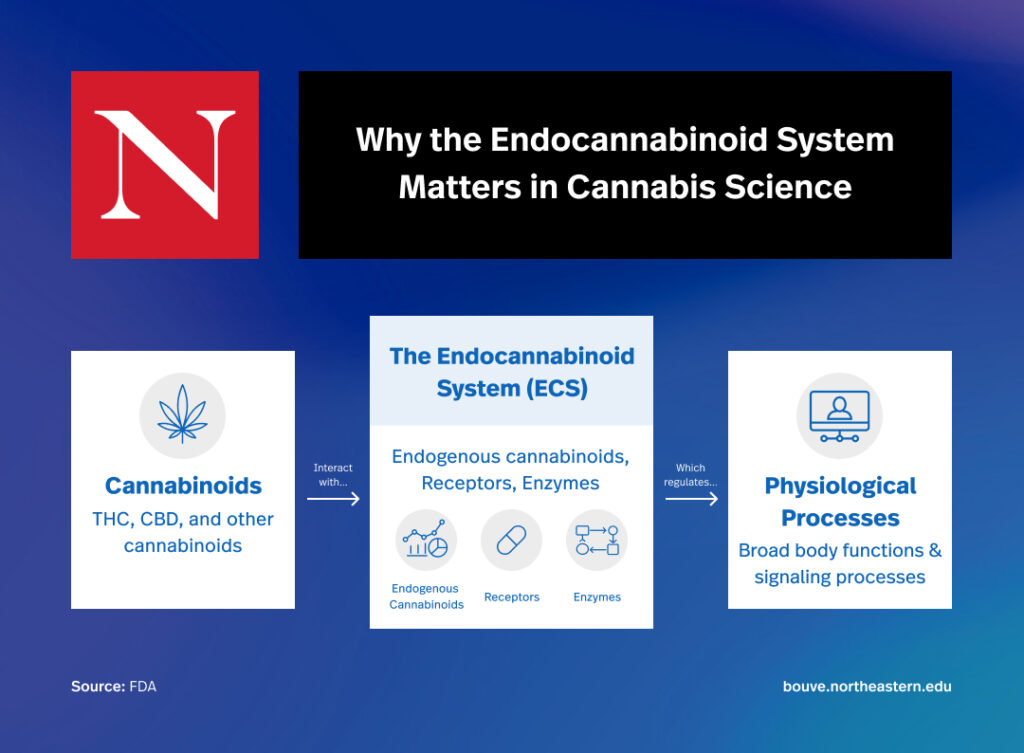
The endocannabinoid system—often abbreviated as ECS—is a biological system involved in regulating physiological processes in the body. It includes endogenous cannabinoids, receptors, and enzymes.
Endogenous cannabinoids are compounds produced by the body, while receptors and enzymes help mediate and regulate signaling.
Cannabis-derived cannabinoids can interact with this system, which is why the ECS is central to cannabis pharmacology and medical cannabis research—it connects cannabinoid chemistry to human physiology. That’s why programs such as Northeastern’s Graduate Certificate in Cannabis Science specifically include study of the human endocannabinoid system along with the medicinal and clinical implications of cannabis.
However, the fact that cannabinoids interact with the endocannabinoid system does not mean every cannabis product has a proven medical benefit. It also does not mean that cannabis is appropriate for every condition, patient, or population. The ECS provides a biological foundation for research, but therapeutic claims still need to be supported by evidence.
What Does Medical Cannabis Research Study?
Medical cannabis research is broader than the study of THC, CBD, or the endocannabinoid system alone. Researchers may study:
- How cannabinoids interact with receptors and biological systems
- Therapeutic potential for specific conditions or symptoms
- Risks, adverse effects, and contraindications
- Dose-response relationships
- Routes of administration, including oral, inhaled, and topical products
- Product quality, purity, potency, and consistency
- Drug development and FDA approval pathways
- Differences between cannabis products and FDA-approved cannabinoid-based medications
- Patient safety and public health implications
The FDA’s drug approval process requires data from clinical trials and other scientific evidence to determine whether a drug is safe and effective for its intended use and whether it meets quality standards. That regulatory context matters because, without that review, product quality, composition, evidence, and claims may vary.
What Does the Evidence Say About Medical Cannabis and Cannabinoids?
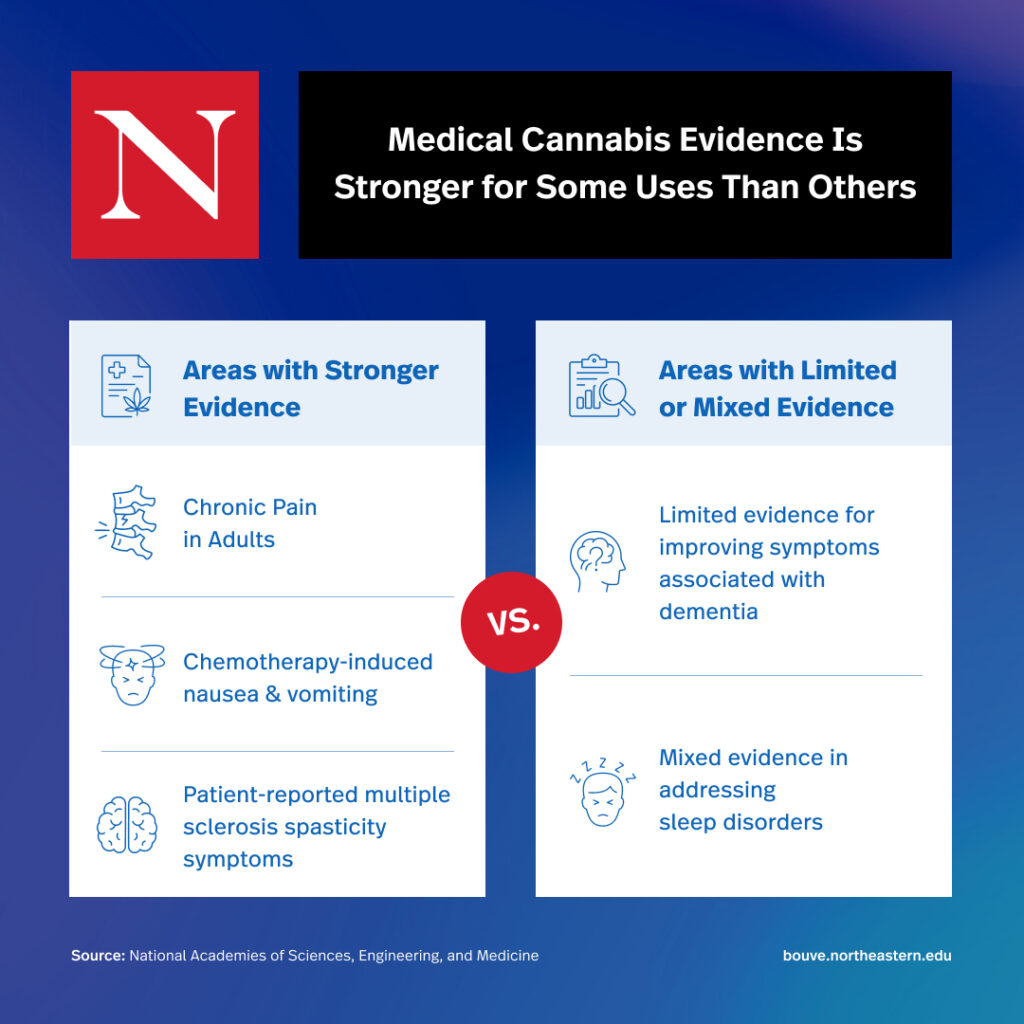
The evidence on medical cannabis and cannabinoids is not all-or-nothing. Some therapeutic uses have stronger evidence than others, and many areas remain uncertain or insufficiently studied.
The National Academies of Sciences, Engineering, and Medicine reviewed evidence on cannabis and cannabinoids and found stronger evidence for certain therapeutic uses. For instance, the report concluded that oral cannabinoids are effective antiemetics for adults with chemotherapy-induced nausea and vomiting. It also found that adults with chronic pain treated with cannabis or cannabinoids are more likely to experience a clinically significant reduction in pain symptoms, and that short-term oral cannabinoid use improves patient-reported multiple sclerosis-related spasticity symptoms.
At the same time, the report found that evidence was limited, insufficient, or mixed for many other conditions and outcomes, such as for certain cancers like glioma.
Why Evidence Varies
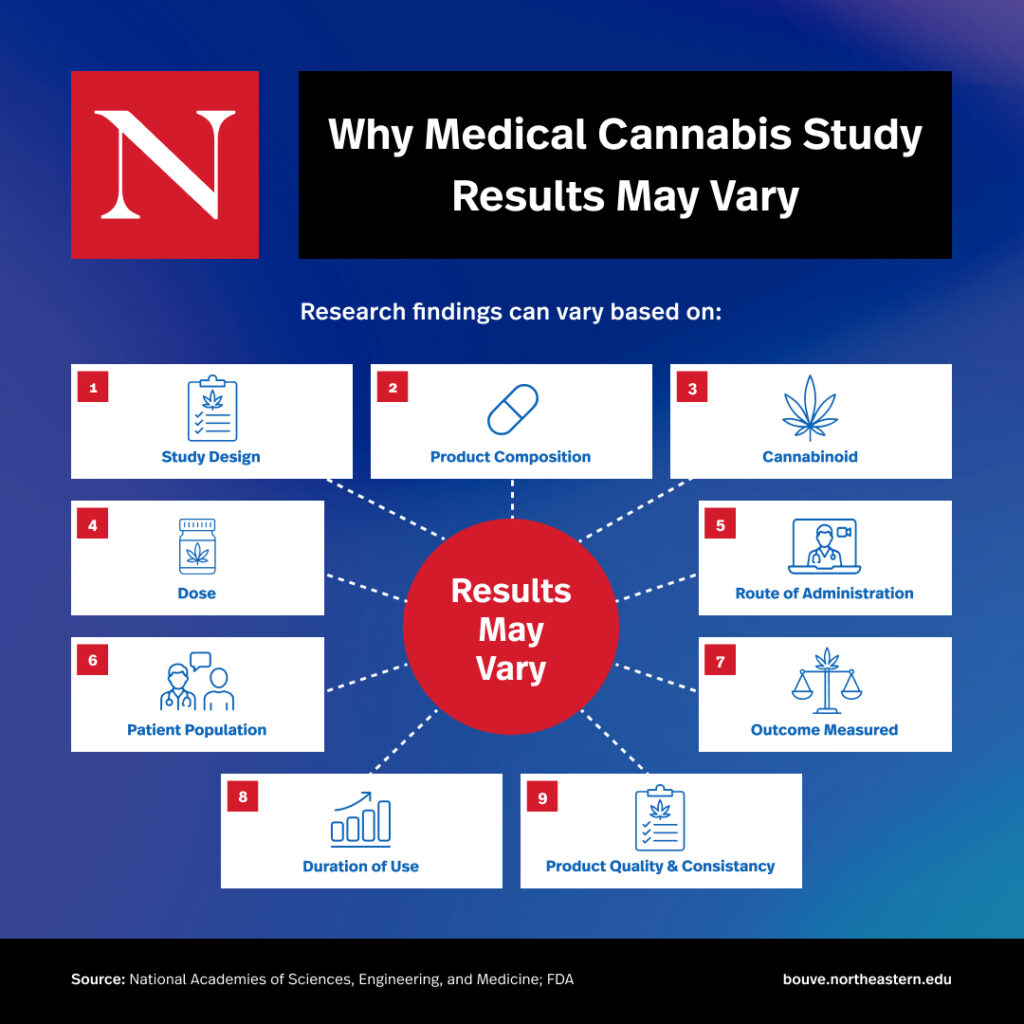
Medical cannabis evidence can vary because of many factors, including:
- Study design
- Product composition
- Cannabinoid type
- Dose
- Route of administration
- Patient population
- Outcome measured
- Duration of use
- Product quality and consistency
This variability is one reason cannabis science requires formal scientific literacy. As Shields explains, scientific training can help professionals “understand the fundamental science that underlies what we do and don’t know, what we can and can’t control,” giving people “a really strong foundation.”
Why Professionals Need Evidence-Based Cannabis Education
The need to evaluate scientific evidence, product quality, patient safety, and regulatory context exists across several roles and settings.
A cannabis industry professional may need to understand medical claims, product composition, testing, and safety. A regulatory or policy professional may need to understand how product quality and evidence intersect with public health.
A science graduate may want to apply their background to cannabinoid research, drug development, product testing, or medical cannabis education. A healthcare-adjacent professional may need stronger literacy in cannabinoids and the endocannabinoid system, even if they are not diagnosing, prescribing, or treating patients with cannabis.
Evidence-based cannabis education can help professionals evaluate:
- Mechanism of action
- Research design
- Evidence strength
- Product quality
- Safety risks
- Patient population
- Regulatory status
- Public health implications
- Ethical communication
Shields notes that many people in cannabis are passionate and well-informed through community knowledge or personal research, but there is still a difference between informal claims and rigorous scientific evidence.
“A formal training in the sciences helps you understand the technical aspect of things that we didn’t apply to cannabis until the last 20 years,” Shields says.
That distinction is especially important in a field that is still evolving. Medical cannabis science includes promise, but also uncertainty, and professionals must be capable of communicating both.
Should You Study Medical Cannabis Science?
Medical cannabis science may appeal to people who want to work in an evolving field where stronger scientific understanding is needed. It may also be a good fit if you:
- Have a background in science, health sciences, pharmaceutical sciences, biomedical sciences, public health, clinical work, regulation, or the cannabis industry
- Are interested in cannabinoids, the endocannabinoid system, pharmacology, or therapeutic research
- Want to evaluate medical cannabis evidence responsibly
- Want to understand product quality, patient safety, policy, or public health
- Are interested in research, product development, medical cannabis education, compliance, or regulatory work
- Want to help bring more scientific rigor to an evolving cannabis field
It may be less aligned if you are looking for personal medical advice, help obtaining a medical cannabis card, a basic cannabis retail credential, or a program that qualifies you to diagnose, prescribe, recommend, or treat patients with cannabis. Graduate cannabis science education can build scientific understanding, but it does not replace professional licensure or clinical authority.
Taking the Next Step Towards a Career in Cannabis Science
Medical cannabis science is a complex and evolving field that requires careful evaluation of evidence, product quality, biological mechanisms, and regulatory context. Understanding cannabinoids, the endocannabinoid system, and the variability in clinical research is essential for professionals who want to engage with cannabis from a scientific perspective.
While some therapeutic applications have stronger evidence than others, many areas remain uncertain, reinforcing the need for rigorous, evidence-based education.
For science-trained learners interested in building that foundation, Northeastern’s Graduate Certificate in Cannabis Science offers a flexible, 100% online program designed to explore cannabis analysis, the endocannabinoid system, medicinal and clinical implications, and emerging research needs. The program is structured to help professionals develop the scientific literacy needed to evaluate claims, understand research, and navigate an evolving industry.
Want to learn more about Cannabis Science Graduate Certificate?
Request more information about the certificate and any questions you might have.