Movement is fundamental to human life — even, some would argue, a human right. Bouvé College’s new Bachelor of Science in Kinesiology is built around the question of how and why humans move.
“The BS in Kinesiology program is the study of human movement, specifically physical activity,” said Dr. Lauren Raine, assistant professor in the Department of Physical Therapy, Movement and Rehabilitation Sciences and Department of Medical Sciences and co-director of the new program. “It’s the scientific investigation of how we move and why we move, everywhere from a cellular level up to a human population level.”
Dr. Chris Cesario, clinical professor in the Department of Physical Therapy, Movement and Rehabilitation Sciences and co-director of the program, said the field is foundational to a wide range of health careers. “There are a lot of health professions that would benefit from understanding how human movement works. Physical therapy is a great example of one of them. Kinesiology is a core class in any physical therapy program,” Cesario said. “Understanding how the body moves and why it moves, and how the bones, muscles, and joints interact, helps you understand what normal movement looks like, so when there’s an impairment, you can understand how to fix it. This information would be helpful for any student seeking a career as a healthcare professional.”
As a clinical professor who also practices physical therapy, Cesario brings hands-on patient care experience directly into the classroom, giving students a direct line between what they study and how it is used in real clinical settings.
A Program Built on Northeastern’s Strengths
Students in the program will take core classes in anatomy, physiology, biomechanics, and motor control, along with courses in psychology, giving them a well-rounded understanding of human movement from every angle.
What sets Northeastern’s program apart, according to Raine, comes down to three things: faculty research, experiential learning, and co-op.
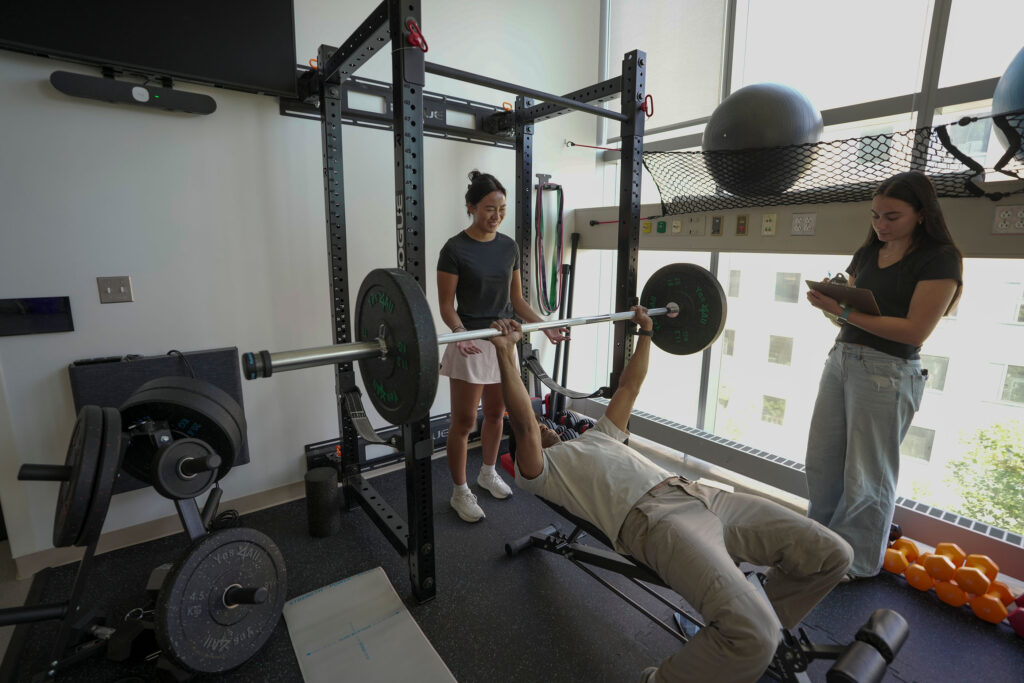
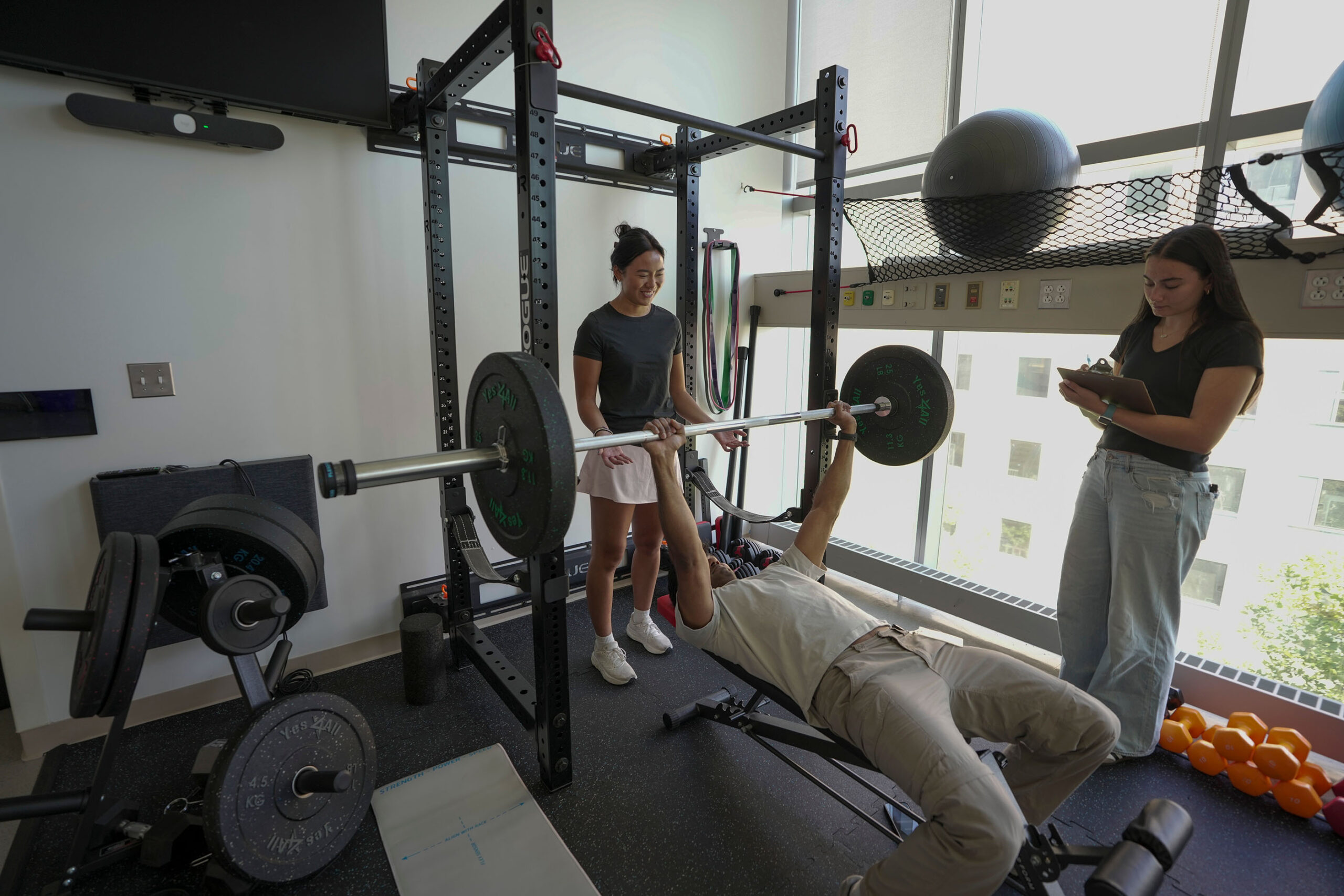
The program’s faculty are active researchers who study human movement at every level, as well as practicing physical therapists and rehabilitation specialists, bringing that research and clinical expertise directly into the classroom. “Students will have access to interact with these faculty members, both within their laboratory, helping them collect critical research data, all the way to the classroom level,” Raine said.
Students can also get involved in research early on. Opportunities range from helping collect and analyze data to presenting at Northeastern’s RISE research symposium, and some students even end up as co-authors on published research.
Then there’s cooperative education or co-op. Kinesiology students can complete a co-op in a clinical setting, a research lab, or with industry partners across the Boston area and across the United States. Cesario noted that Northeastern has clinical partners locally and nationally that let students see kinesiology applied in real settings, whether that’s inpatient care for people with neurological impairments, outpatient sports medicine, or pediatric care for developmental disorders.
“Coming to Northeastern means participating in experiential education,” Cesario said. Meaning, you do not sit in a classroom and take tests; you are in a lab, in the community, engaged in research where you will build clinical skills and reasoning.
Who the Program Is For
Raine said the program is designed for students from all kinds of backgrounds. “Maybe you were an athlete in high school who’s really interested in what makes athletes want to develop and perfect their sport. You may also be a student who is passionate about helping individuals become and stay physically active, or you want to understand how technology can be used to promote movement. Maybe you suffered an injury as a child, and that’s what motivates you to study physical activity and movement,” she said. “That unique blend of students will make the classroom environment incredibly rich and fulfilling.”
The program is also highly customizable. Students can shape their coursework, research, and co-ops around their own interests, whether that means studying movement in young children, older adults, athletes, or any other population.
Where It Can Lead
A kinesiology degree opens several doors. Some students go on to health professions like physical therapy, as noted by Dr. Cesario. Others move into industry roles in technology, health, fitness and sports, fields that are increasingly focused on understanding human movement. Still others pursue research and go on to graduate school.
“What’s great about a kinesiology degree is it gives you lots of options,” Raine said. “You can become a health care professional. You can work in the exercise field, in strength and conditioning, or in research. It gives you a variety of opportunities you can stack together depending on your interests.”
Why It Matters Now
Both faculty members pointed to a growing public health concern based on populations in the U.S. and around the world becoming more sedentary, with real consequences for physical, cognitive, and mental health. Since CDC findings demonstrate that only 24.2% of adults met the Physical Activity Guidelines for Americans for both aerobic and muscle-strengthening activities, “Students within the program have a really critical and unique opportunity to engage with this problem that not just the country, but the entire world is facing,” Raine said, “and to think of new ways we can help improve the health of everyone.”
For students who want to understand how the human body works and use that knowledge to help others, Raine has simple advice: “If you’re a student who wants to learn how the body moves, and if you’re interested in a research career, an exercise career, or a clinical career, understanding how the body moves is going to help you in all of those arenas.”
The BS in Kinesiology is now open to prospective students. For more information, contact the Bouvé College of Health Sciences at [email protected].