In a regulated cannabis market, a product’s value depends on more than how it is grown, manufactured, or sold. Before cannabis products reach consumers or patients, they may need to be tested, documented, labeled, tracked, and reviewed against state-specific requirements.
That is where cannabis testing, compliance, and quality control come together. Testing helps determine what is in a product, from cannabinoid potency to potential contaminants. Quality control helps companies maintain consistency and safety across batches. Compliance helps ensure products and processes meet the rules of the market where they are sold.
For science professionals, this is one of the clearest areas where cannabis science becomes practical. Legal cannabis products often move through regulated systems that require testing for potency, microbial contamination, pesticides, heavy metals, moisture, residual solvents, and other quality or safety factors depending on state rules. As the industry continues to develop, professionals who understand laboratory methods, product variability, data interpretation, and regulatory context may be well-positioned to contribute to testing, compliance, quality assurance, quality control, and product safety.
Through targeted educational programs like Northeastern University’s Graduate Certificate in Cannabis Science, learners can build foundational knowledge in cannabis analysis, quality, regulatory context, and product safety that may support work in testing, compliance, or related areas.
What Is Cannabis Compliance?
Everything from cultivation facilities to product labeling to transportation methods has an impact on the quality and safety of cannabis products. Cannabis compliance is the set of laws and policies that dictate how cannabis should be grown, processed, tested, sold, and marketed in a regulated cannabis industry. Compliance may involve:
- Meeting business licensing requirements
- Meeting state and local regulations
- Following product testing rules
- Tracking inventory
- Packaging and labeling products correctly
- Keeping records and documentation
- Maintaining consistent product safety standards
- Adhering to advertising/marketing restrictions
- Following transportation and distribution rules
- Understanding medical vs. adult-use laws
- Passing audits and inspections
Beyond its legal function, compliance depends on scientific data like lab results, product specifications, and contaminant testing. Scientists use a variety of techniques to oversee quality standards, such as creating batch records to keep track of production and taking potency measurements to categorize product strength.
Dr. Miyabe Shields, PhD, a Northeastern graduate, cannabis science educator, and structural biochemist by training, explains that each state has a regulatory body. “Every state that goes legal establishes its own set of rules for how it will do the standardization of potency, which is THC percentage, but then also microbial testing safety, etc. So every state has its own set of standards.”
State regulations of cannabis can also change as markets mature, public health priorities shift, testing methods improve, and lawmakers or regulators revise program rules.
What Is Cannabis Product Testing?
Cannabis product testing is the laboratory analysis of cannabis and cannabis-derived products to assess composition, safety, quality, and compliance with applicable requirements. Testing can occur at several points in the cultivation or manufacturing process, starting with the plant material, flower, extracts, and concentrates.
Other points of testing include the production of edibles, beverages, inhalable products, and finished goods. Testing batches of products before they are put on sale provides a final opportunity to prevent noncompliant, mislabeled, contaminated, or otherwise unsafe products from reaching consumers.
Cannabis product testing helps manufacturers answer crucial questions such as:
- What cannabinoids are present?
- How much THC, CBD, or other cannabinoids are in the product?
- Are contaminants present?
- Is the product consistent with its label?
- Does the product meet state safety standards?
- Is the product suitable for sale in a regulated market?
Testing labs often prove a perfect entry point into the cannabis industry for professionals, as assessing product safety is core to both cannabis retail and medical applications. No matter how the industry evolves, compliance and testing will likely remain the most standardized and mandated aspects of the cannabis world.
“The testing laboratories in cannabis are everywhere,” Shields says. “There’s tons of them. That is a highly competitive field, and probably, the largest number of people in entry-level positions in cannabis science is through testing laboratories or through working for a dispensary.”
What Do Cannabis Products Get Tested For?
Products that are consumed or used in human activity need testing to ensure they do not expose people, animals, or the environment to harmful substances. Evaluating the properties of cannabis products is an important aspect of safety because classifying its composition and strength allows people to use dosages correctly and in the right applications.
Here are the most important types of cannabis testing used for safety and classification purposes.
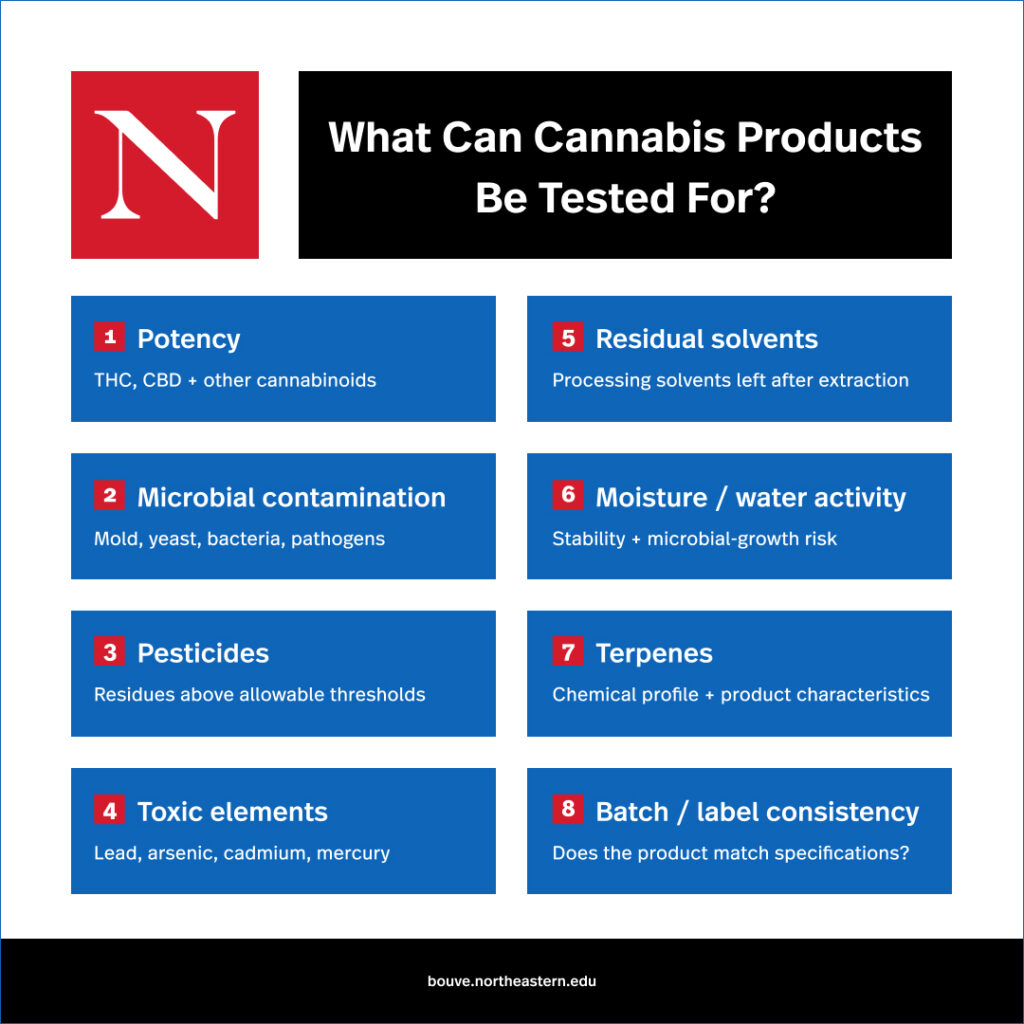
Cannabinoid Potency
Cannabinoids are plant-derived or synthetic chemical compounds that can interact with biological systems in the body. The endocannabinoid system is a signaling system that includes endogenous cannabinoids, receptors, and enzymes and is involved in regulating physiological processes such as mood, memory, immune response, and pain perception.
Potency testing measures the amount of specific cannabinoids present in cannabis products such as THC and CBD. The measurement helps determine product strength, which then informs labeling, dosing information, and regulatory compliance. While cannabinoid potency is only one part of product testing, it’s often the most visible classification to consumers and what they notice first.
Microbial Contamination
Cannabis products can be consumed and inhaled, and derived products like hemp are also used in cosmetics, skincare, soap, textiles, packaging, and construction materials. Microbial testing looks for organisms or contaminants that may create safety concerns, depending on the product type and state requirements.
Common types of microbial contaminants that labs look for include mold, yeast, bacteria, or specific pathogens based on regulatory standards for the particular product, application, or industry.
Pesticides
Pesticide testing helps determine whether cultivation or processing introduced residues that exceed allowable thresholds. As Shields explains, this type of testing is analytical chemistry-driven and involves techniques such as:
- HPLC: In high-performance liquid chromatography, a cannabis sample is dissolved in a liquid solvent and pumped through a special column that separates the pesticides from cannabinoids and other chemicals without the use of heat.
- LC-MS: Liquid chromatography–tandem mass spectrometry uses HPLC techniques combined with a mass spectrometer that identifies the pesticides based on their mass and structure once separated.
- NMR: Nuclear magnetic resonance spectroscopy helps to identify compounds in cannabis based on their structure and study how they change or break down during different stages of plant processing.
Heavy Metals and Toxic Elements
Cannabis can be tested for heavy metals or toxic elements such as lead, arsenic, cadmium, and mercury. When plants absorb heavy metals, the particles can become deeply embedded in the plant’s tissues, making them difficult to remove. Not only can these toxic elements stunt the plant’s growth, but they can spread to soil, water, or air and eventually contaminate food and medicine.
Ongoing exposure to heavy metals may cause organ damage or failure in humans if the substances build up in blood and tissue. Heavy metal testing is necessary to make sure the growing conditions are safe and won’t degrade the crop quality or harm consumers.
Residual Solvents
Some cannabis extraction processes use chemical solvents such as butane, propane, or ethanol to separate cannabinoids and other compounds from plant material. Many solvents are harmful to human health and may cause serious issues, such as lung inflammation. They can also affect the taste and overall quality of cannabis products. Products made through extraction methods may require testing to detect the residual solvents left from processing, so they can be removed or lowered to safe levels.
Moisture and Water Activity
Since moisture can affect product quality, stability, and consistency and increase the risk of microbial growth, it’s important to monitor the moisture content. Too little moisture can lead to dry, brittle plants, while too much moisture may enable mold, yeast, and bacteria to grow.
Maintaining the correct level of moisture protects the health, longevity, aroma, and flavor of the plants. Many regulators define safe moisture levels and appropriate storage and labeling methods to ensure the water activity is compliant.
Terpenes and Other Compounds
Although requirements vary, testing is sometimes conducted to analyze terpenes or other compounds that contribute to product characteristics. Terpenes are hydrocarbon compounds that give the plant many of its biological traits, such as flavor, aroma, and natural resilience to environmental threats like insects and fungi.
Terpene testing helps producers characterize the profile of different types and batches of cannabis. When experimenting with hybrids or adjusting the growing conditions, cultivators and scientists are also able to measure and track differences in chemical profiles based on the terpene content.
Label Accuracy and Batch Consistency
From a quality control perspective, testing helps producers and manufacturers monitor batch consistency and supports accurate labeling. Whether producing cannabis for retail or research, correct labeling helps to ensure products have the same profile across batches.
How Do Testing, Quality Control, and Compliance Work Together?
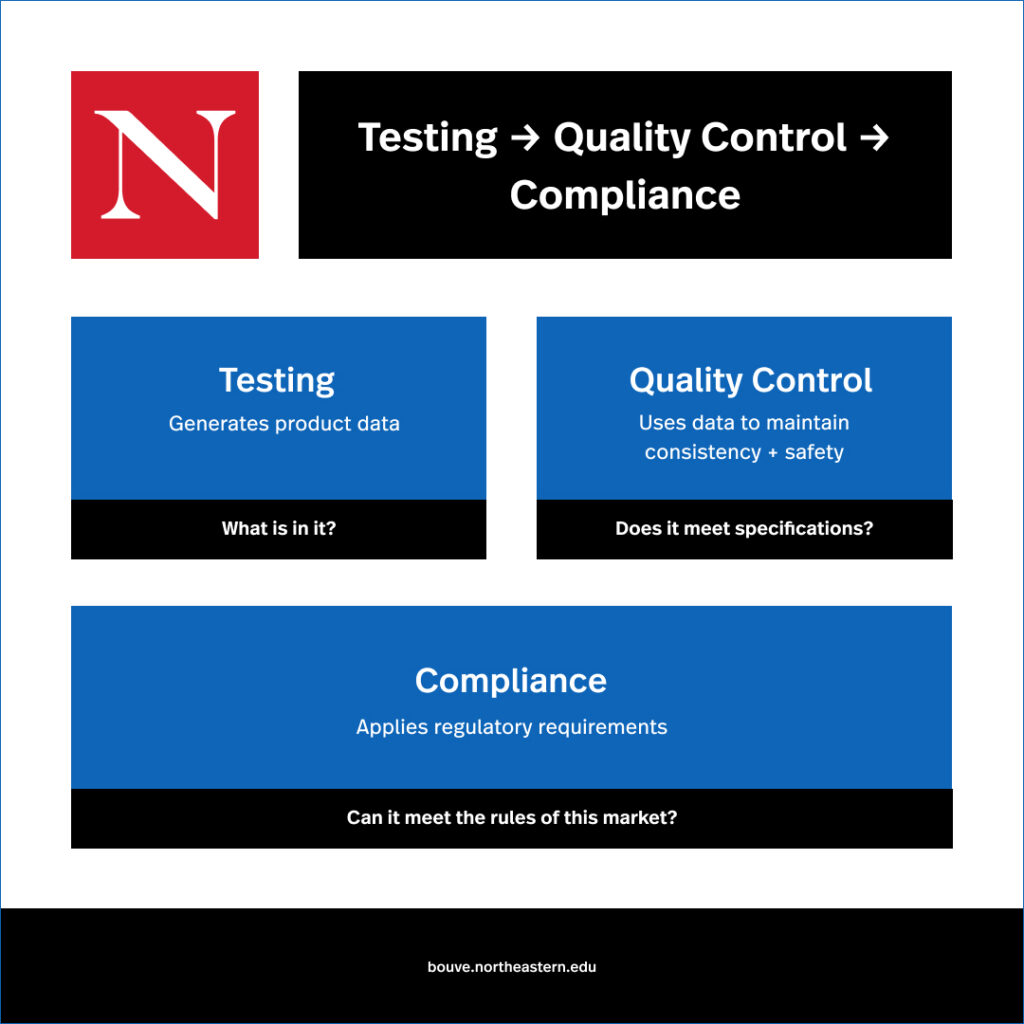
Testing, quality control, and compliance are interconnected functions that make it possible to commercialize cannabis as a product and create a stable marketplace for it. Testing generates data about cannabis products. Companies are able to identify what is in a product, the quantities present, and the resulting properties.
Quality control uses the data and testing processes to maintain product consistency and safety. Compliance determines whether the products and processes meet legal and regulatory requirements in the market where they’ll be sold.
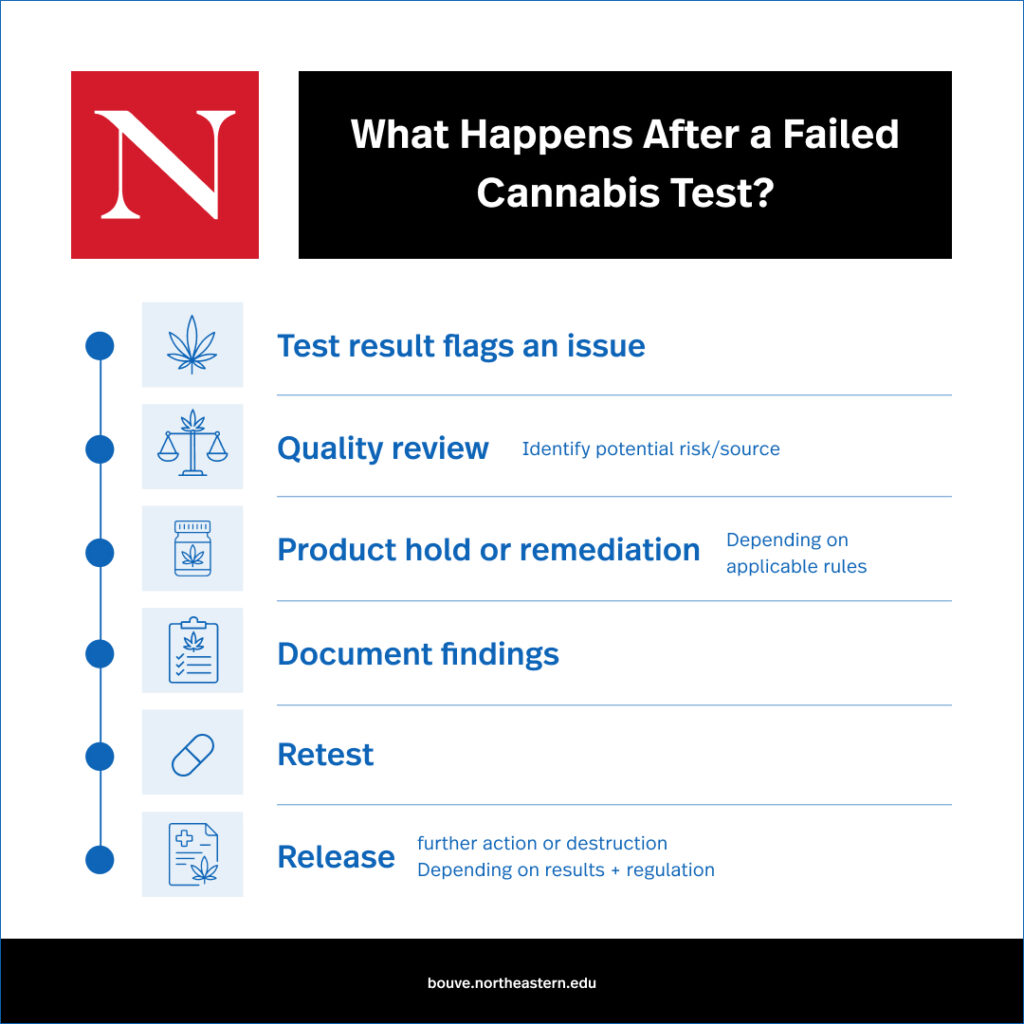
A good example is a failed test, which may trigger a quality review to identify potential risks, remediation to reduce contaminants, documentation to record the findings, and retesting to check the quality again. If a product doesn’t comply with regulatory standards, a product hold may be necessary to keep it off the market for further testing, or the product might be destroyed for safety purposes.
Science professionals are valuable throughout all of these testing and regulatory processes because they can understand lab results, methods, product variability, and practical implications of data.
Why Reliable Methods and Standards Matter
Cannabis is regulated differently across states and still developing as a formal industry, making reliable methods and standards especially important. Labs need comparable, trustworthy measurements to conduct accurate experiments and identify unsafe products. Manufacturers need confidence in the test results in order to provide high-quality products to consumers and comply with regulatory requirements.
Regulators have to create clear, enforceable standards for product manufacturers to follow, and consumers and patients need accurate labeling and safety protections on products. Businesses need consistent processes to maintain quality control. At every link in this chain, the right data has to reach the appropriate parties so that they can make informed decisions.
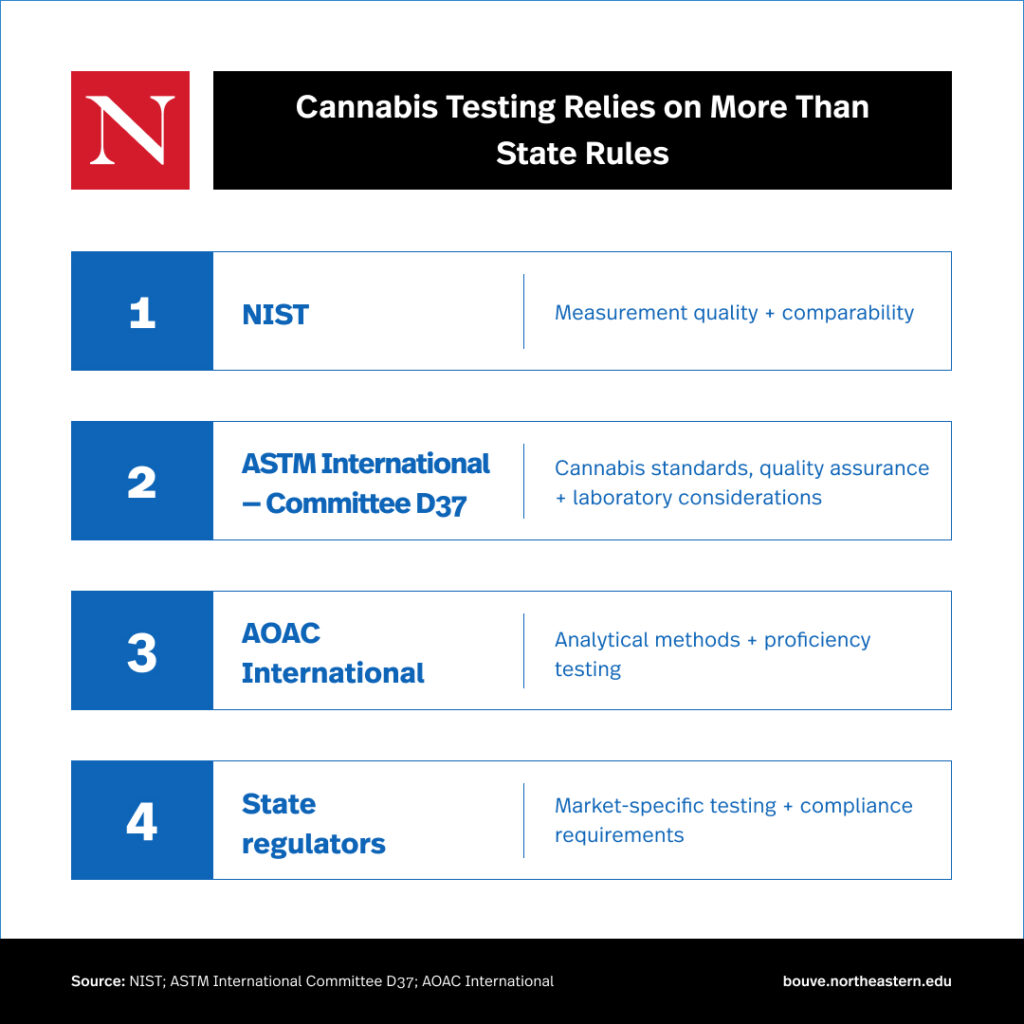
Despite the variance in regulations, state agencies have federal and industry guidelines they can use to develop standards. For example, the National Institute of Standards and Technology’s (NIST) cannabis laboratory quality assurance tools are designed to help cannabis testing laboratories improve routine analysis and measurement comparability.
ASTM International Committee D37 develops standards for cannabis, cannabis products, and processes, including areas like quality assurance and laboratory considerations. AOAC International Cannabis Analytical Science Program supports analytical methods, standards, and proficiency testing.
Why Cannabis Compliance Varies by State
In the absence of a single national cannabis regulatory framework, states have developed their own cannabis rules, creating significant variations from market to market. For instance, the Massachusetts Cannabis Control Commission provides testing and analysis guidance for regulated operators and has updated testing requirements to support public health and safety.
The state-by-state model means compliance requirements can differ significantly depending on location, and states are drafting policies on entirely different timelines.
“The global market is expanding and then there’s the individual state-by-state market, and that is going to vary in a huge way. Look at Alabama. There’s all sorts of legal hurdles and everything even though Alabama has voted on it, and it has been passed. It’s taking years and years for it to come online.” Shields makes the point that “Alabama is just starting where California got started in 1996.”
The implementation of the legalized market differs across every component of cannabis regulatory compliance, including testing thresholds, licensing, product categories, packaging and labeling rules, and tracking and documentation.
For example, 41 states have legalized medical cannabis as of 2026, while only 24 have legalized non-medical adult use. In California, industrial raw hemp must have a purity level greater than 99% and not contain any THC or synthetic cannabinoids to be allowed in food, beverages or dietary supplements. On the other hand, many states do not allow hemp in food at all or restrict distribution to licensed retailers.
Professionals should consult current state guidance to understand cannabis regulations in their desired location and how these policies could potentially affect their career goals.
Where Do Science Professionals Fit?
Science-trained professionals in cannabis compliance may contribute to:
- Testing laboratories: Testing facilities analyze cannabis products to determine qualities like potency, safety, and moisture level.
- QA/QC: Quality assurance teams oversee the processes for creating products, and quality control teams ensure products meet specified standards.
- Compliance teams: Compliance involves all practices required to follow regulations for producing and distributing cannabis products.
- Product development: Product teams design and test new cannabis products and refine them for commercialized retail.
- Extraction and processing: Scientists in extraction convert raw cannabis into derived products such as oils and concentrates.
- Formulation: Formulation scientists combine cannabinoids and other compounds to produce cannabis products with specific properties and high quality.
- Regulatory affairs: Working with cannabis producers, regulatory professionals make sure every phase of product development meets regulatory requirements.
- Standards development: Standards organizations create rules and practices for developing safe, high-quality products and processes.
- Technical consulting: Consultants offer scientific and operational advice for achieving the best cultivation, manufacturing, and compliance outcomes.
- Medical cannabis or product safety education: Educators provide consumer guidance on using cannabis safely, especially for therapeutic applications.
- Public health or policy work: Cannabis law and policy professionals develop strategies to implement cannabis regulations and consumer safety practices.
For students who already have a science background, cannabis education can help them transition into cannabis regulations, testing, and product development fields. Northeastern University’s Graduate Certificate in Cannabis Science provides foundational knowledge in cannabis chemistry, analysis, business, and law for those who want to pursue roles in scientific research, medical and clinical applications, drug design, policy development, and product innovation.
As Shields points out, people already working in cannabis can also use continuing education to move into lab, corporate, policy, or global work and to explore technical pathways emerging as the industry gains structure.
Should Science Professionals Pay Attention to Cannabis Compliance?
Cannabis compliance offers diverse opportunities for science professionals, especially if they’re interested in product safety, testing, quality systems, regulatory affairs, medical cannabis, or product development. As the industry is still building its standards, compliance is a moving goalpost that’s taking shape differently across the national and global landscape.
Science-trained professionals can help the industry mature responsibly by providing more understanding of the complex chemical implications of cannabis. Compliance depends on accurate data about cannabis, while testing and quality control are central to product safety and market credibility. Scientists support all of these functions with rigorous research and experimentation, which will be more valuable the more complex the industry becomes.
For those looking to enter the cannabis field, Northeastern’s cannabis science certificate program can provide the scientific, business, and legal context needed to understand how to advance the industry’s commercialization goals. The science-based focus allows individuals to move into all aspects of the field, including testing, compliance, and quality control.
Explore Northeastern’s Graduate Certificate in Cannabis Science to learn how the online program helps science-trained learners build a foundation in cannabis analysis, quality control, safety standards, and regulatory context.
Want to learn more about Cannabis Science Graduate Certificate?
Request more information about the certificate and any questions you might have.