YOU ARE BOUVÉ

The Department of Public Health and Health Sciences provides a world-class education in a broad range of public health and clinical careers that promote the health and well-being of individuals, communities, and populations in culturally diverse contexts. We also train the next generation of clinicians by providing a strong foundation in health science, along with comprehensive pre-med and pre-health advising.
We are committed to evidence-based research and research translation to eliminate health disparities. Our department is a unique, transdisciplinary setting that incorporates teaching, learning, and serving, in a rapidly evolving, multicultural environment.
Our comprehensive degree programs provide students the resources they need to become medical professionals through application guidance, workshops and presentations, course mapping and more. Prepare yourself for PreMed/PreHealth with the Bouvé experience.
Our interdisciplinary faculty have research, practice, and teaching expertise in:
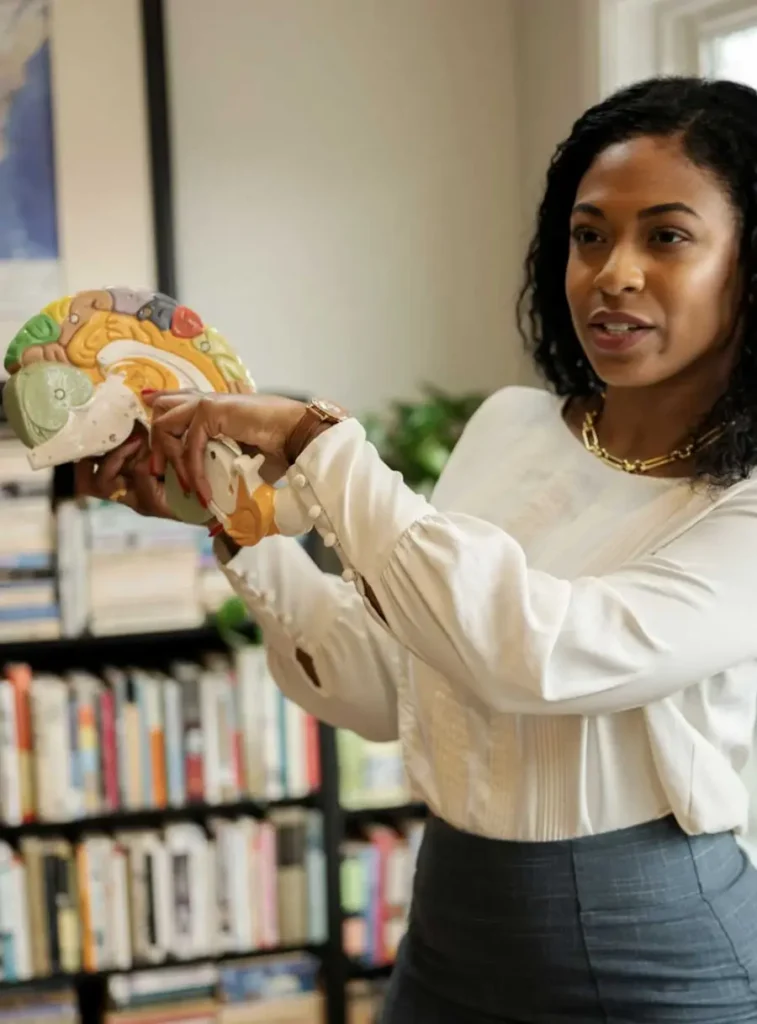
Dr. Crossing has received a $114,000 planning grant to develop ROOTS, a screening tool that reimagines behavioral health assessment in schools — measuring community conditions like poverty and discrimination alongside individual risk. The project unites Applied Psychology and Public Health, with doctoral student Naomi Ruchugo guiding digital deployment. Funding runs through August 2027.
Dr. Lowrey received an AWS Social Impact Award to support development and pilot testing of Food ALERT, an AI-powered platform connecting food donors with nonprofit organizations to boost surplus food recovery. Using adaptive matching, computer vision, and historical data, the platform pairs donations with nonprofits by real-time capacity — enabling more pickups while preserving partnerships.
Dr. Scarpino was named Director of Northeastern’s Institute for Experiential AI. His human-centric AI research tackles real-world public health challenges, with work published in The New England Journal of Medicine, The Lancet Global Health, and The Lancet Infectious Diseases His research focuses on AI applications for predicting and tracking outbreaks like Cyclospora and Ebola.
Dr. Schoene’s AI research reveals how chatbot safety filters can be bypassed to generate self-harm content, with findings featured in TIME and The New York Times. As a Scientific Expert Advisor to Meta, she specializes in AI safety’s applications to mental and public health, including safe AI use and patient data protection.
Dr. Olivieri-Mui investigates care quality for older adults with HIV, with a focus on nursing homes. She has delivered talks on HIV, aging, and caregiving needs, highlighting challenges in maintaining treatment access during nursing home transitions. Her antiretroviral therapy research, featured in JAMA Network Open, has implications for AIDS service organizations and clinical providers.

Northeastern University’s Department of Public Health and Health Sciences is connected to a rich cluster of evidence-based learning institutes and centers.
Students have the opportunity to gain hands-on learning through a number of health science-focused institutes.

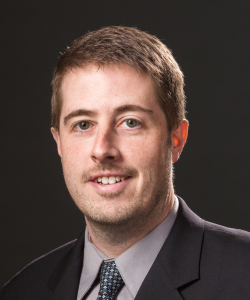
Dr. Leeman is an experimental psychologist with a public health focus. He has leadership roles in several national and international professional societies and is chair of the Health Science department at Northeastern University.
Faculty Spotlight
Our mission in the Department of Public Health and Health Sciences is to educate the next generation of leaders in public health and clinical health professions; to conduct cutting-edge research on causes of negative health outcomes and ways to prevent them; and to contribute to our communities locally, nationally, and globally.
Our undergraduate major in Health Sciences is among the most popular at Northeastern and our major in Public Health is an outstanding option for students with an interest in sociocultural factors shaping health, public health policy or administration. Undergraduates in our majors learn hands-on through exciting co-op placements, mostly in the Greater Boston area – a hub of public health and clinical activity.
Our Master of Public Health (MPH) and other master’s programs share a commitment to experiential learning and offer unmatched levels of interaction between students and expert faculty. The Population Health PhD program offers close faculty mentorship and has an enviable track record of placement of students into faculty positions at top universities. The innovative PhD program in Personal Health Informatics, conducted jointly with the Khoury College of Computer Sciences, is a model of interdisciplinary education.
Though our faculty have a variety of backgrounds and foci, a passion for advancing health equity is a strong, unifying factor that permeates our research, teaching, and community involvement. These efforts take on many forms, including the activities of our Social Justice Steering Committee; efforts to advance LGBTQ+ health; and to mitigate negative impacts of racism and other prejudices.
I believe the more you learn about our department, the more excited you will become about what our faculty, staff and students have accomplished, but even more so about what can be accomplished in the future.
Upon satisfactory completion of the Public Health Program, graduates should be able to:
Upon satisfactory completion of the Health Science Program, Graduates should be able to:
The Bachelor of Science in Artificial Intelligence and Health Science program learning outcomes follow the outcomes listed above for the Bachelor of Science in Health Science program, with the addition of program learning outcomes for Artificial Intelligence. The following integrative outcome captures the cross-disciplinary competency that emerges when students engage with both fields:
The Bachelor of Science in Artificial Intelligence and Public Health program learning outcomes follow the outcomes listed above for the Bachelor of Arts in Public Health program, with the addition of program learning outcomes for Artificial Intelligence. The following integrative outcome captures the cross-disciplinary competency that emerges when students engage with both fields:
The Bachelor of Science in Biology and Public Health program learning outcomes follow the outcomes listed above for the Bachelor of Arts in Public Health program, with the addition of program learning outcomes for Biology. The following integrative outcome captures the cross-disciplinary competency that emerges when students engage with both fields:
The Bachelor of Science in Business Administration and Public Health program learning outcomes follow the outcomes listed above for the Bachelor of Arts in Public Health program, with the addition of program learning outcomes for Business Administration. The following integrative outcome captures the cross-disciplinary competency that emerges when students engage with both fields:
The Bachelor of Science in Computer Science and Health Science program learning outcomes follow the outcomes listed above for the Bachelor of Science in Health Science program, with the addition of program learning outcomes for Computer Science. The following integrative outcome captures the cross-disciplinary competency that emerges when students engage with both fields:
The Bachelor of Science in Computer Science and Public Health program learning outcomes follow the outcomes listed above for the Bachelor of Arts in Public Health program, with the addition of program learning outcomes for Computer Science. The following integrative outcome captures the cross-disciplinary competency that emerges when students engage with both fields:
The Bachelor of Science in Criminal Justice and Public Health program learning outcomes follow the outcomes listed above for the Bachelor of Arts in Public Health program, with the addition of program learning outcomes for Criminal Justice. The following integrative outcome captures the cross-disciplinary competency that emerges when students engage with both fields:
The Bachelor of Science in Cultural Anthropology and Health Science program learning outcomes follow the outcomes listed above for the Bachelor of Science in Health Science program, with the addition of program learning outcomes for Cultural Anthropology. The following integrative outcome captures the cross-disciplinary competency that emerges when students engage with both fields:
The Bachelor of Science in Design and Public Health program learning outcomes follow the outcomes listed above for the Bachelor of Arts in Public Health program, with the addition of program learning outcomes for Design. The following integrative outcome captures the cross-disciplinary competency that emerges when students engage with both fields:
The Bachelor of Science in Environmental Engineering and Health Science program learning outcomes follow the outcomes listed above for the Bachelor of Science in Health Science program, with the addition of program learning outcomes for Environmental Engineering. The following integrative outcome captures the cross-disciplinary competency that emerges when students engage with both fields:
The Bachelor of Science in Health Humanities and Health Science program learning outcomes follow the outcomes listed above for the Bachelor of Science in Health Science program, with the addition of program learning outcomes for Health Humanities. The following integrative outcome captures the cross-disciplinary competency that emerges when students engage with both fields:
The Bachelor of Science in Health Science and Business Administration program learning outcomes follow the outcomes listed above for the Bachelor of Science in Health Science program, with the addition of program learning outcomes for Business Administration. The following integrative outcome captures the cross-disciplinary competency that emerges when students engage with both fields:
The Bachelor of Science in Health Science and Communication Studies program learning outcomes follow the outcomes listed above for the Bachelor of Science in Health Science program, with the addition of program learning outcomes for Communication Studies. The following integrative outcome captures the cross-disciplinary competency that emerges when students engage with both fields:
The Bachelor of Science in Health Science and Criminal Justice program learning outcomes follow the outcomes listed above for the Bachelor of Science in Health Science program, with the addition of program learning outcomes for Criminal Justice. The following integrative outcome captures the cross-disciplinary competency that emerges when students engage with both fields:
The Bachelor of Science in Health Science and Law program learning outcomes follow the outcomes listed above for the Bachelor of Science in Health Science program and the following integrative outcomes:
The Bachelor of Science in Health Science and Psychology program learning outcomes follow the outcomes listed above for the Bachelor of Science in Health Science program, with the addition of program learning outcomes for Psychology. The following integrative outcome captures the cross-disciplinary competency that emerges when students engage with both fields:
The Bachelor of Science in Health Science and Sociology program learning outcomes follow the outcomes listed above for the Bachelor of Science in Health Science program, with the addition of program learning outcomes for Sociology. The following integrative outcome captures the cross-disciplinary competency that emerges when students engage with both fields:
The Bachelor of Science in Health Science and Spanish program learning outcomes follow the outcomes listed above for the Bachelor of Science in Health Science program, with the addition of program learning outcomes for Spanish. The following integrative outcome captures the cross-disciplinary competency that emerges when students engage with both fields:
The Bachelor of Arts in Health Humanities and Public Health program learning outcomes follow the outcomes listed above for the Bachelor of Arts in Public Health program, with the addition of program learning outcomes for Health Humanities. The following integrative outcomes capture the cross-disciplinary competencies that emerges when students engage with both fields:
The Bachelor of Arts in Human Services and Public Health program learning outcomes follow the outcomes listed above for the Bachelor of Arts in Public Health program, with the addition of program learning outcomes for Human Services. The following integrative outcomes capture the cross-disciplinary competencies that emerges when students engage with both fields:
The Bachelor of Arts in Public Health and Communication Studies program learning outcomes follow the outcomes listed above for the Bachelor of Arts in Public Health program, with the addition of program learning outcomes for Communication Studies. The following integrative outcome captures the cross-disciplinary competency that emerges when students engage with both fields:
The Bachelor of Arts in Public Health and Cultural Anthropology learning outcomes follow the outcomes listed above for the Bachelor of Arts in Public Health program, with the addition of the program learning outcomes for Cultural Anthropology. The following integrative outcomes captures the cross-disciplinary competency that emerges when students engage with both fields:
The Bachelor of Arts in Public Health and Journalism learning outcomes follow the outcomes listed above for the Bachelor of Arts in Public Health program, with the addition of the program learning outcomes for Journalism. The following integrative outcomes captures the cross-disciplinary competency that emerges when students engage with both fields:
The Bachelor of Arts in Public Health and Law program learning outcomes follow the outcomes listed above for the Bachelor of Arts in Public health program and the following integrative outcomes:
The Bachelor of Arts in Public Health and Sociology program learning outcomes follow the outcomes listed above for the Bachelor of Arts in Public Health program, with the addition of program learning outcomes for Sociology. The following integrative outcome captures the cross-disciplinary competency that emerges when students engage with both fields:
The Bachelor of Arts in Spanish and Public Health program learning outcomes follow the outcomes listed above for the Bachelor of Arts in Public Health program, with the addition of program learning outcomes for Spanish. The following integrative outcome captures the cross-disciplinary competency that emerges when students engage with both fields:
Successful completion of the MPH program enables graduates to:
Successful completion of the MPH program enables graduates to:
All graduates fulfill the competencies that guide the MPH Program.
After completion of the Health Informatics MS program, graduates will be able to:
After completion of the Health Informatics MS program, graduates will be able to:
After completion of the Population Health PhD program, graduates will be able to:
Department of Public Health and Health Sciences
360 Huntington Ave
316 Robinson Hall
Boston, MA 02115
617-373-3666
Health Sciences Majors
Samantha Garbers, PhD
[email protected]
MPH & MPH Dual Degree Programs
Neil Maniar, PhD, MPH
617-373-5925
[email protected]
Exercise Science MS Program
Rui Li, PhD, MS
617-373-5925
[email protected]
Population Health PhD
Beth Molnar, ScD, SM
617-373-5925
[email protected]
Learn from and work with public health professionals striving to improve the health of individuals, families, and communities around the world. Below are the main areas of expertise for our faculty. That said, the public health field is vast, has many interdisciplinary overlaps, and is ever-evolving. We both welcome and drive that change for current and future public health careers.
Cutting edge data collection and analysis methods, including application to large, real world datasets.
Enhancing the health of groups, including those living outside of metropolitan areas.
Relationships between people and their physical contexts: the impact of people’s behaviors on those contexts and the impact of these contexts on health (e.g., pollution).
Distribution and determinants of health-related issues within populations and applying lessons learned to ameliorating these issues.
Determinants of and ways to improve health in a worldwide context with a goal of achieving equity.
Exploring the best practices and methods for explaining and disseminating information to promote better health.
Enhancing efficiency, effectiveness and value in health and influencing rules and regulations accordingly to achieve health-related goals.
Applying organized knowledge and skills using devices, medications, vaccines, procedures and systems to address health-related issues and improve quality of life.
Individual psychological states and how they influence people’s actions, along with ways to enhance these for the betterment of health.