












YOU ARE BOUVÉ

The PhD Program in Population Health at Northeastern University integrates interdisciplinary education and experiential learning opportunities to train students to become public health researchers and leaders who understand the complex factors that affect the health and well-being of populations. The program has:


Our program trains students to become public health leaders through simultaneous examination of multiple determinations of health, including social, environmental, nutritional, and behavioral risk factors.
Our students investigate the underlying causes of adverse health, including disease, disparities, and disability, through training in core population health disciplines:
This training is done together with individual-specific and specialized training in topics related to student research.
Our students are mentored by Northeastern’s distinguished faculty, who individually and together conduct innovative, solution-focused research in critical population health topics.
Working professionals can complete a Population Health PhD through Northeastern’s Industry PhD Pathway.
This pathway lets students conduct dissertation research at their employer site while maintaining full-time employment, with mentorship from both a Northeastern faculty advisor and a designated advisor from your organization. Your organization must enter into a partnership agreement with Northeastern and pay an administrative fee.
Built for Working Professionals: Flexible scheduling designed to fit your career. Most students complete their PhD in 3–5 years, with evening options that respect your schedule.
Career Growth Without Pause: Earn the credentials and research depth to move into leadership roles.
No Cost to You: Tuition and fees are covered by an annual administrative fee, fully funded by your employer through a formal partnership.
Academic Rigor & Real-World Relevance: Conduct meaningful research that benefits both your career and your organization.
Dual Mentorship: Benefit from guidance by both Northeastern faculty and industry advisor at your employer, ensuring your research is academically rigorous and professionally relevant.
Biostatisticians and epidemiologists ready to transition from data analysis to research leadership roles.
Research professionals in academia or industry seeking to become PIs or scientific leads.
Mid-career professionals balancing work with the desire for a terminal research degree.
Degree type: Doctor of Philosophy in Population Health (PhD)
Study Format:
– Full-time
– On-ground (Boston campus) only
– PhD Option for full-time professionals
Entry Term: Fall
Application deadline: Dec 6
Prerequisites: None
Most applicants have a master’s degree
Applications accepted:
Domestic and international
Grad assistantships available:
Full-time students only
GRE: Optional
STEM Designated PhD:
Allows for a 24-month STEM OPT extension for F-1 students
Please Note: PhD students in the Bouvé College of Health Sciences may not request enrollment deferrals. If you are admitted for a given term but wish to be considered for a future term instead, you must re-apply to the program to be considered for admission and funding.
Population Health doctoral students conduct research that addresses key determinants of health including:
All Population Health PhD candidates must complete core research courses, select a concentration, and take additional electives and directed study courses, as needed and in consultation with their faculty advisors. They must complete a dissertation to earn their degree.
Industry PhD Students complete the same core coursework and dissertation requirements as traditional Population Health PhD students. However, their research is conducted in collaboration with their employer, allowing projects to address real-world organizational or community health challenges.
A full list of program outcomes for the PhD in Population Health is available on the department page.
Curriculum subject to change.
For most up-to-date information please refer to the university’s academic catalog.
The Population Health PhD program accepts applications for fall entry through December 6. While there are no prerequisites for this PhD, most of our applicants already have a Master’s degree.
All application materials should be submitted only through the SOPHAS portal; there is no separate university submission portal.
We encourage applicants interested in rigorous public health research training to apply. Evidence of quantitative research skills through degree transcript or work experience is essential. Submission of GRE test scores is optional. Applicants may be invited to participate in an interview with the admissions committee and/or potential faculty mentors before an admission decision is made.
Applicants who are full-time professionals may apply through the Industry PhD Pathway, which allows enrollment while employed.
Completed SOPHAS application
Official transcripts
Mailing Address:
SOPHAS Transcript Processing Center
P.O. Box 9111
Watertown, MA 02471
Electronic transcripts: See SOPHAS Instructions
Resumé
Personal Statement
Your personal statement should identify specific research interests, explain how your background shapes your research interests and career goals in population health, why you want to pursue your PhD at Northeastern, and how your experience aligns with the work of current faculty members.
You may contact faculty whose work matches your goals to discuss mutual fit.
Official test scores
Submission of GRE test scores is optional.
TOEFL or IELTS scores are required from international applicants who possess degrees from institutions outside the United States. Use code #5688. The PhD Program requires a minimum score of 100 on the TOEFL and a minimum test score of 7.5 on the IELTS (official test scores from similar English-language tests may not be substituted).
Requests to be waived from the TOEFL requirement are determined on a case by case basis by the Program Director. Email Dr. Brianne Olivieri-Mui at [email protected] with your request and relevant materials (eg, CV/resume, transcripts).
3 letters of recommendation
Only academic and professional letters of recommendation will be accepted.
SOPHAS application fees and fee waivers:
Only SOPHAS collects an application fee, not the university, so we are unable to provide fee waivers. To request a SOPHAS waiver, please apply directly through their website:
We welcome your questions about our program. Please send general program inquiries and admissions-related questions to:
Dr. Brianne Olivieri-Mui
Interim Program Director
Tali Schiller, MPH
Program Manager



Completing your public health training at Northeastern University gives you the opportunity to learn from and collaborate with faculty conducting rigorous research in public health as well as public health professionals working to improve the health of individuals, families, and communities around the world. Below are our faculty’s primary areas of expertise. The field of public health is broad, highly interdisciplinary, and constantly evolving. We both welcome and lead that change to prepare students for current and future public health careers in research and practice.
Cutting edge data collection and analysis methods, including application to large, real world datasets.
Enhancing the health of groups, including those living outside of metropolitan areas.
Relationships between people and their physical contexts: the impact of people’s behaviors on those contexts and the impact of these contexts on health (e.g., pollution).
Distribution and determinants of health-related issues within populations and applying lessons learned to ameliorating these issues.
Determinants of and ways to improve health in a worldwide context with a goal of achieving equity.
Exploring the best practices and methods for explaining and disseminating information to promote better health.
Enhancing efficiency, effectiveness and value in health and influencing rules and regulations accordingly to achieve health-related goals.
Applying organized knowledge and skills using devices, medications, vaccines, procedures and systems to address health-related issues and improve quality of life.
Individual psychological states and how they influence people’s actions, along with ways to enhance these for the betterment of health.
Neelam Ahmed received her BA in Biology and Spanish from the University of Rhode Island and her MPH in Epidemiology from the Brown University School of Public Health. During her time at Brown, she contributed to a systematic review examining determinants of COVID-19 vaccine willingness and completed a thesis on regional variation in oral bisphosphonate use for osteoporosis among Medicare beneficiaries.
Neelam’s research interests center on how facility organization, ownership, and regulation influence healthcare quality and access. She is currently investigating how immediate jeopardy citation receipt affects skilled nursing facilities’ 5-star ratings and other quality benchmarks, and continues to pursue work on vertical integration, not-for-profit hospital community benefit provision, and provider experiences with an OUD alert system. She works extensively with Medicare data and is interested in incorporating Komodo Health data into future research.
In her free time, Neelam enjoys playing tennis, kayaking, taking long walks, and spending time by the ocean.
Jiaxing Bao’s research interests focus on health equity, cognitive health among older adults, and the social determinants of health. During his PhD training, he has developed a stronger interest in cognitive health among older adults, especially how social and economic conditions shape cognitive aging and health disparities. His previous research experience at USC analyzing inequities affecting marginalized communities also deepened his commitment to addressing health disparities.
Jiaxing received a Master of Public Administration from the University of Southern California and a Bachelor of Arts in Advertising from Zhengzhou University.
In his free time, Jiaxing enjoys watching soccer, especially FC Barcelona and Messi, as well as jogging and hiking.
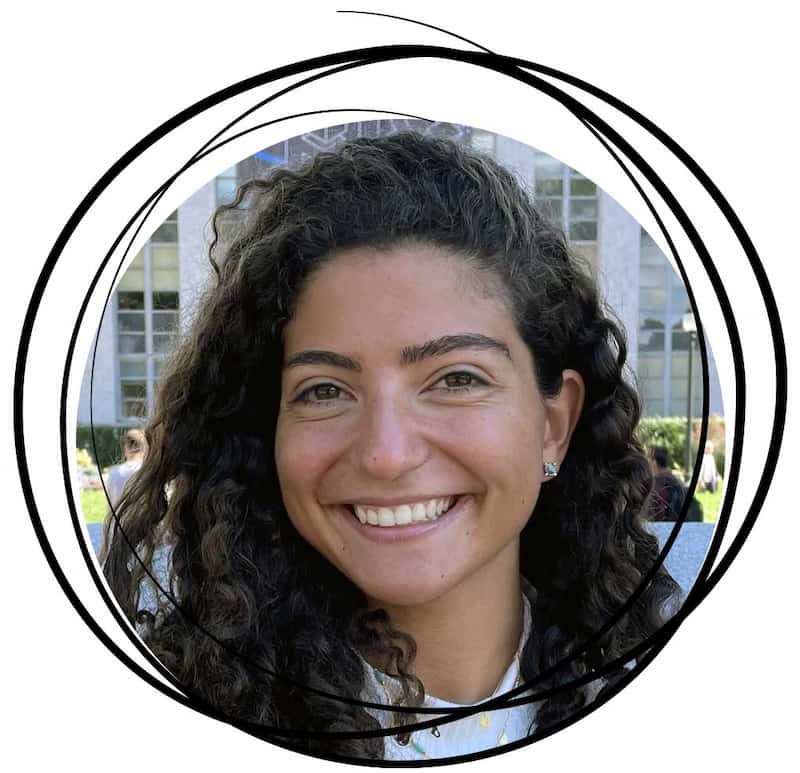
Sima Bou Jawde (she/هي) is a doctoral candidate in Population Health at Northeastern University, leading mixed-methods research on how labor conditions, economic precarity, and migration stress shape mental health and family functioning among immigrants and communities of color. Her work bridges intersectional theory with epidemiological methodology to advance health equity research nationally and globally.
She is the recipient of multiple grants and awards including: Philip M. Kayal Fund for Arab American Research, the Srinivasan Family Award for Projects in Emerging Markets, the Northeastern University Outstanding PhD Student Award in Leadership, and the Women Who Empower Innovator Award for founding Enrich Academia, a platform supporting scholars from the Global South. Her research has been presented at the American Psychological Association, the NIH Global Mental Health Conference, and the Interdisciplinary Association of Population Health Sciences.
Beyond the academy, Sima is a community builder and cultural organizer. She holds an MPH in Epidemiology and Biostatistics as well as Global Health Program Design, Monitoring and Evaluation from Boston University School of Public Health, and a BS in Biology with a Minor in Creative Writing from the American University of Beirut.
Mengyuan Cheng earned a M.Phil. in Health Economics, Policy and Management, from the University of Oslo. During her master’s study, she worked as a research intern at the Norwegian Institute of Public Health. Her role as a research assistant at UNC Project China centered on epidemiological assessments and economic analyses, focusing on interventions for HIV, HCV, and orthopedic issues.
Recently, she has taken the lead in a study that synthesizes evidence to assess the effect of “Hospital at Home” services on the well-being of elderly individuals dealing with chronic conditions.
In her free time, Mengyuan enjoys watching movies, playing tennis, and going on nature hikes.
Liz Davis’s research focuses on how area-level social and structural determinants of health contribute to disparities in health outcomes.
Before entering the Population Health PhD program, Liz received a Master of Science in Public Health (MSPH) in Applied Epidemiology from the University of Alabama at Birmingham. She currently works part-time as a biostatistician at Mass General Brigham, where most of her work is focused on examining area-level factors driving rural-urban differences in cancer mortality.
Liz enjoys women’s soccer, trivia, cooking, and reading.
Lauren Ellis conducts policy-relevant environmental epidemiology and causal inference research, focusing on the impact of PFAS (per- and polyfluoroalkyl substances) and other toxic chemicals on reproductive, developmental, and neurological health.
She integrates systematic review, environmental mixtures, and machine learning-based causal inference methods to study the health effects of PFAS exposure, assessed via biomonitoring and geospatial methods. Lauren also collaborates with social scientists to examine federal PFAS governance and exposure disparities.
Lauren earned her BA in Political Economy from Tulane University and MPH in Environmental Health Science and Policy from the George Washington University. As an MPH student, she contributed to chemical risk assessment systematic reviews through contracting work for EPA and other federal agencies and led a meta-analysis examining the impact of pesticide exposure on sperm concentration. Lauren then worked as an Environmental Health Research Analyst at the Environmental Defense Fund, translating scientific evidence to support health-protective implementation of the Toxic Substances Control Act.
In her free time, Lauren enjoys strength training, exploring Boston’s coffee shops and restaurants, and spending time in nature with her dog, Remi.
Salome Goglichidze is a PhD candidate in Population Health at Northeastern University. Her research focuses on how immigration policies shape health, well-being, and social welfare among immigrant populations in the United States. She combines quantitative and qualitative methods, including causal inference approaches, to examine the health and social impacts of employment-based immigration policies on highly skilled immigrant workers and their families.
Salome holds an MPH from Northeastern University and a Master’s degree in Economics from the International School of Economics at Tbilisi State University (ISET). Before pursuing public health studies, she worked at the State Audit Office of Georgia, where she evaluated the efficiency, economy, and effectiveness of the Public Ambulance Medical Service System and contributed to policy recommendations that improved health service delivery in Georgia. Her experience sparked a lasting interest in using data-driven research to inform policy and advance health equity.
In her free time, Salome enjoys exploring nature with her family and gathering with friends to sing and play music together.
Leah Greene, MPH, is a Senior Chronic Disease Epidemiologist at the Massachusetts Department of Public Health. She earned her MPH from New York Medical College and a BA in Biology and Spanish from SUNY Geneseo.
Her research interests focus on health economics and outcomes research using a social epidemiology lens, focusing on how social determinants of health shape individual-level outcomes. She hopes her findings will provide insight on how policy interventions can promote health equity and improve population health for those historically excluded from receiving optimal care.
Her current work examines the causal relationships between health law and policy and subsequent health outcomes among populations at an elevated risk of poor health due to health-related social needs and broader social determinants of health.
Outside of her professional pursuits, Leah enjoys coaching soccer at the club and high school levels for girls ages 12 to 18.
Yuxin Huang has engaged in diverse research across population health and environmental sciences. She engaged in malaria research and mosquito parasite resistance during her undergraduate program at the University of California, Irvine. While earning her MPH in the same program, she tracked the COVID-19 virus in wastewater, contributed to creating the population health profile for the Latino population in Orange County with AdvanceOC and CalOptima Health, and analyzed data to explore the impact of soil metal exposure on asthma among school-aged teenagers.
Yuxin enjoys traveling and photography, reading different kinds of fiction and trying out new recipes in the kitchen, and watching anime and playing video games.
Julia Logan received her BS in Public Health and MPH in Environmental Health Science & Policy from George Washington University. During her master’s education, she worked on projects involving environmental justice at the U.S. Environmental Protection Agency, and explored social and environmental risk factors for breast cancer at Breast Cancer Prevention Partners.
Julia’s current research focuses on the role of endocrine-disrupting chemicals in women’s health outcomes. She leads a research program called ENDEX (Endometriosis and Environmental Exposures), implementing participatory research methods to educate and empower patients to reduce their exposures to harmful chemicals. She collects quantitative and qualitative data and integrates social science, epidemiology, and exposure science in her research. Julia’s goal as a researcher is to uplift the voices of affected communities and translate their priorities into actionable science.
Outside of her research, Julia enjoys knitting, cooking, reading, and playing with her dog Clover.
Prior to starting her doctoral work, Olivia Macfadden explored the relationship between climate and health through research with Novartis and the Drugs for Neglected Diseases Initiative. Her research interests sit at the intersection of environmental exposures and health equity.
Olivia holds a Master of Advanced Studies in International Health from the Swiss Tropical and Public Health Institute in Basel, Switzerland and a Master of Science in Sustainability Science, Policy, and Society from Maastricht University, The Netherlands.
Katie McCreedy is a doctoral student in Population Health Sciences at Northeastern University, where she studies the epidemiology of overdose and substance use, with a focus on how local government systems shape health outcomes among people who use drugs. She is a triple husky — she holds an MPH with a concentration in Epidemiology and a BS in Health Science, both from Northeastern.
Katie has worked as an overdose epidemiologist with Portland Public Health and the Boston Public Health Commission. As a harm reductionist and researcher with Northeastern’s Action Lab, she has also supported extensive legislative advocacy while training numerous lab interns and co-ops. She has taught epidemiology and TA’d across Northeastern’s MPH curriculum. Her research on topics including drug-induced homicide, prescription drug monitoring programs, media misinformation, and drug policy has been presented at CSTE, the American College of Epidemiology, the Northeast Epidemiology Conference, and has been published in JAMA, IJDP, JAM, and the Northeastern Law Review.
Katie has hiked across 45 national parks and is an avid soccer player, skier, and surfer. She loves living in Boston with her partner, of 10 years, Noah, a fellow Northeastern alum, and their cat Suki.
Elizabeth Nakiyingi practiced as a medical doctor in obstetrics, gynecology, and sexual and reproductive health in Uganda before transitioning to public health and research, which brings a unique clinical foundation to her public health journey. She earned her Bachelor of Medicine and Surgery from Kampala International University, Uganda, and later completed a Master of Public Health at Washington University in St. Louis.
Her research experience spans maternal and child health including work on postpartum hemorrhage neonatal mortality prevention, as well as child and adolescent mental health, HIV prevention, and sexual risk behavior among adolescents and young people. She has also contributed to research on teenage pregnancy in sub-Saharan Africa, including projects in Malawi and Kenya examining the structural and contextual factors that shape adolescent reproductive health outcomes. Her current work also examines adolescent sexual and reproductive health information-seeking behavior.
In her free time, she loves to cook, sing, and dance to Afrobeats. She also enjoys traveling and exploring new places, especially those with beaches.
Supritha Nimmala is a physician who completed her medical education and training at SRM Institute of Science and Technology in Chennai, India. She earned an MPH in Quantitative Methods (Epidemiology and Biostatistics) from Harvard University, where she also completed an interdisciplinary concentration in Public Health Leadership. Prior to the PhD program, she worked as a postdoctoral research fellow at Massachusetts General Hospital and Harvard Medical School contributing to clinical research in neuroendocrinology with a focus on functional hypothalamic amenorrhea, obesity, and bone metabolism.
Her primary research interests span endocrine and reproductive epidemiology. Her doctoral research applies causal inference methods and target trial emulation to large healthcare utilization databases to examine the real-world effectiveness and safety of therapeutic strategies during pregnancy on maternal and perinatal outcomes.
Outside of research, Supritha is an avid plant parent with a growing collection of houseplants and a passion for flower arranging. She also enjoys yoga, hiking, and baking.
Narcissa Plummer earned her Bachelor of Science in Chemistry with a concentration in Biochemistry from Salem State University and an MPH in Epidemiology from the University of Massachusetts Lowell.
Her research interests focus on how historically racist policies continue to shape the experiences of older adults in nursing homes. She is especially interested in examining quality of care, quality of life, access to life-critical medications and health services, and the role of spatial and social epidemiology in understanding these inequities.
Outside of work and school, Narcissa enjoys ceramics, especially wheel throwing, as well as watching anime and historical documentaries, visiting museums, hiking, listening to music, and traveling.
For the past 16 years, Catherine Saltus has worked as a pharmacoepidemiologist at RTI Health Solutions, a nonprofit research institute with a mission of conducting innovative, multidisciplinary research that improves the human condition. Her work includes post-marketing studies evaluating the use, safety, and effectiveness of treatments preventive interventions in various therapeutic areas, with a strong focus on database studies. Catherine holds both a Master of Arts (MA) in Medical Science and a Master of Public Health (MPH) in Epidemiology from Boston University.
Through the Population Health program, Catherine has developed an interest in pharmacologic treatments for obesity and their expanding use in other medical conditions, particularly in how use may perpetuate or exacerbate existing health disparities.
She enjoys travel, playing softball, running, yoga, trying new restaurants, and entertaining her two needy Great Danes.
Neha Singh previously served as a Biostatistician at Northwell Health, where she worked as a statistician on various emergency medicine, pathology and pharmacy research projects. She served as a statistician on various clinical research projects to assist in sample size calculation, research study protocol submissions for IRB and data analysis. Currently, she is the inaugural biostatistician of the Biostatistics Unit at Bouve College of Health Sciences where she provides biostatistical support to the Bouve research community. She earned a Masters of Science in Applied Statistics from DePaul University.
Her future interests are to conduct research in a collaborative research environment and create policies and prevention programs that will be helpful in reducing risk factors or mortality rates in underserved populations. During her personal time, she likes to paint and attempt various types of painting techniques for modern art. She also keeps herself closely connected to nature by traveling, hiking and exploring outdoors.
Megan Souza received her BA in Child Development and Clinical Psychology from Tufts University in 2017. She then continued at Tufts to complete her Master’s degree in Child Study and Human Development with a focus on Clinical Developmental Health and Psychology. She spent three years working for the National Alliance on Mental Illness of Northern Virginia, coordinating youth mental health programs, before returning to Boston to start her PhD.
Megan’s research focuses on mental health, violence, and trauma. She currently conducts mixed methods evaluation research for a grant providing early childhood mental health services, primarily conducting qualitative interviews and focus groups to assess service implementation and impact. Her dissertation work explores mechanisms of intimate partner violence among queer women and youth that may offer opportunities for prevention.
In her free time, Megan enjoys west coast swing dancing, hiking, reading, and spending time with her 6-year-old pitbull, Foghorn.
Wanjiang (Lucy) Wang received her BS in Statistics from the University of Wisconsin–Madison and her MS in Biostatistics from the University of North Carolina at Chapel Hill.
Lucy’s research interests lie in maternal and reproductive health, real-world evidence, and health outcomes research. She is particularly interested in understanding factors that influence pregnancy and maternal health outcomes and in leveraging electronic health records, healthcare claims databases, and cohort studies to address clinically relevant public health questions.
During her doctoral training, Lucy worked as a Real-World Evidence Analyst in the pharmaceutical industry, where she supported evidence-generation initiatives using large healthcare databases. This experience strengthened her interest in translating epidemiologic research into actionable insights that inform healthcare decision-making and patient outcomes.
Outside of research, Lucy enjoys playing tennis, traveling, baking breads and desserts, exploring coffee shops, reading, and documenting everyday moments through photography.
Xuezheng (Leah) Wang received her B.A. in Psychology from the University of Rochester and her Master of Public Health in Biostatistics from Columbia University. Her research interests lie at the intersection of childhood adversity, trauma, and mental health, with a particular focus on child maltreatment, and Complex Post-Traumatic Stress Disorder (CPTSD).
Leah is currently a Research Assistant at the New York State Psychiatric Institute, where she works with longitudinal data from the LONGSCAN study to investigate how early-life experiences shape mental health trajectories across development. She has also contributed to research in youth behavioral health and clinical oncology before, including studies on metastatic breast cancer treatment outcomes.
Outside of research, Leah enjoys spending time with her cats, swimming, attending concerts, watching films, and exploring photography.
Shuai Yuan previously graduated from Cornell University with a Master’s degree in Public Health, and before that a Bachelor’s in Chemical and Biomolecular Engineering from HKUST.
At Northeastern University, Shuai works with Dr. Robert Leeman on alcohol research. Shuai’s primary research interest is preventing early alcohol and cannabis initiation among adolescents, including studying its etiology and designing interventions. Shuai’s academic goal is to be among the first researchers to apply advanced methods such as causal inference to answer complex research questions in substance use.
In her free time, Shuai spends most of her time with her two cats, cooking and enjoying healthy, fresh food.
The doctoral students in Northeastern’s Population Health PhD program don’t wait for graduation to start contributing to the field. Their work spans the determinants this program was built around — social and neighborhood context, environmental risk, health care access, and economic stability — applying the core tools of population health: biostatistics, epidemiology, and health services research. The scholars listed below are actively publishing and shaping the evidence base for healthier populations. Click on any name to explore their work.
Michael Williams
Megan Zelinsky


No, our program does not require certain classes that applicants must take or have taken prior to applying. However, the majority of the students in the program enter with a previous master’s degree.
Submission of GRE test scores is optional.
TOEFL or IELTS scores are required from all international applicants who have not earned an undergraduate or graduate degree in the United States or in a country where English is the primary language. Fluency in English is integral to success of graduate students in our program. Guidelines for submitting a request to waiver the TOEFL/IELTS requirement are outlined in the Admissions section above.
Certain required classes (for example, introductory classes in Biostatistics and Epidemiology) can be waived if you have taken equivalent classes in previous graduate programs. Course waivers will be determined on a case-by-case basis once a student is accepted and officially matriculates into the PhD program. Please note: course waivers do not substitute for the credit requirements. Students can enroll in elective courses to meet the requirement.
Please go to the PhD Network’s Funding FAQ page for all questions about funding.
A few required courses have online course equivalents that doctoral students may choose to take. However, we do not offer the program as an online program, and these online class offerings are very limited.
A strong match between a prospective student’s research interests and a faculty member is essential for admission. Your first step is to review faculty profiles, contact faculty whose work aligns with your interests to assess mutual fit, and describe potential matches in your personal statement. The faculty admissions committee will then evaluate fit during the review process. You do not need a faculty commitment before applying, and any faculty member listed on our website may accept students depending on fit and funding.
All materials should be submitted only through the SOPHAS portal; there is no separate university submission portal.
We welcome any questions you might have about our program.

ScD
Program Director, PhD Program in Population Health; Professor Public Health and Health Sciences

MPH
Program Manager, PhD Program in Population Health; Part-time Lecturer Public Health and Health Sciences

Students are trained to conduct highly rigorous research examining the social and environmental determinants of health through the use of quantitative and qualitative research methods. This is a cohesive, transdisciplinary program that integrates topics that include the five pillars of public health, including epidemiology, biostatistics, health program evaluation, environmental health, and social determinants of health.
Social Epidemiology
Advanced Methods in Biostatistics
Dissertation preparation classes
Directed Study (can be repeated as needed)
Sample Electives
Various electives (exact number of courses determined in conjunction with faculty advisor)
Environmental Health
Principles and History of Urban Health
Society, Behavior, and Health
Causal Inference 1 & 2
Generalized Linear Models
Foundations of Community Health Assessment
Qualitative Research Design
Geographic Information Systems for Urban and Regional Policy
Sociology of Health and Illness
Environment, Health, and Society
Social Movements in Health