Finishing a physician assistant studies graduate program is only the first step. The bigger question is whether that degree will prepare graduates to compete for jobs.
The answer starts with what employers actually value. Employers are usually looking for graduates who combine clinical competence, communication skills, professionalism, adaptability, and readiness for team-based care.
They are not hiring only for knowledge but rather, the ability to use that knowledge well in real patient-care settings. That helps explain why the profession continues to show strong labor-market demand, with the U.S. Bureau of Labor Statistics reporting a median annual wage of $133,260 and 162,700 jobs (2024), with a projected 20% employment growth from 2024 to 2034.
A strong PA program should help students build exactly those employer-valued qualities. Here, we’ll look at how the right program can help students develop key skills, the ability to adapt to an ever-changing healthcare field, and the ability to step into the job on day one.
What Skills Do Employers Want in PA Graduates?
At the most basic level, employers want graduates who look ready to enter practice, not just ready to graduate. That usually means a blend of technical and professional strengths:
- Clinical reasoning to evaluate symptoms, develop differential diagnoses, and help shape treatment plans
- Patient communication to explain conditions, next steps, and care decisions clearly
- Professionalism in how a graduate works with patients, preceptors, and colleagues
- Interprofessional teamwork in physician-led, team-based care settings
- Adaptability in fast-moving environments where patient needs and priorities shift quickly
That mix is part of the logic behind PA education itself.
Physician assistants examine, diagnose, and treat patients under physician supervision. Employers also want graduates who can gather accurate patient information, synthesize evidence, participate effectively on interprofessional teams, and contribute to management plans.


Physician Assistant Career Guide
Start your PA journey. Grab the complete Physician Assistant Career Guide.

Clinical Skills Matter — But So Does Judgment
No employer hires a physician assistant graduate without expecting a strong clinical foundation. Employers want candidates who can evaluate patients, recognize patterns, interpret information, and contribute to diagnostic and treatment decisions responsibly.
That begins with the kind of coursework built into PA education. Northeastern University’s Physician Assistant (MS) program at the Bouvé College of Health Sciences, for instance, offers courses such as:
- Anatomy and Physiology
- Clinical Lab and Diagnostic Methods
- Physical Diagnosis and Patient Evaluation
- Pharmacology
- Principles of Medicine
- Clinical Neurology
- Pediatrics
- Surgery
- Emergency Medicine and Critical Care
Those subjects can help build the medical and diagnostic base employers expect new graduates to bring into practice.
However, employers are not simply hiring for recall. They want judgment—the ability to apply knowledge appropriately in real situations. A graduate who can perform well on an exam but struggles to prioritize information, communicate uncertainty, or respond appropriately in a patient setting may not feel practice-ready to a hiring team. That is why employer value is tied not just to what students learn, but to how well they learn to apply it.
Communication, Professionalism, and Teamwork Still Shape Hiring
Clinical ability may open the door, but interpersonal and professional skills often determine just how attractive a job candidate may be.
Healthcare environments are deeply collaborative. PAs work in physicians’ offices, hospitals, outpatient clinics, and other healthcare settings, where communication is not optional. It directly impacts a patient’s understanding of what is happening, care coordination, safety, and workflow.
Professionalism matters just as much.
Employers want graduates who show reliability, maturity, and sound judgment in patient-facing environments. Jason Parente, PA-C, a practicing physician assistant and PA program director at Northeastern, explains the “human side” of readiness in one of the most important attributes new PAs can have.
“People sometimes forget how delicate medicine is and how delicate life can be. When you’re in the classroom reading textbooks and doing cases and watching a screen, it’s a very different environment than being in front of a patient and dealing with a real human being,” he says.
Why Adaptability Carries So Much Employer Value
Adaptability is one of the clearest strengths of PA training, and one of the most important to employers.
Parente puts it plainly: “This profession is built on ‘lateral mobility’—the ability to switch specialties without redoing your training.”
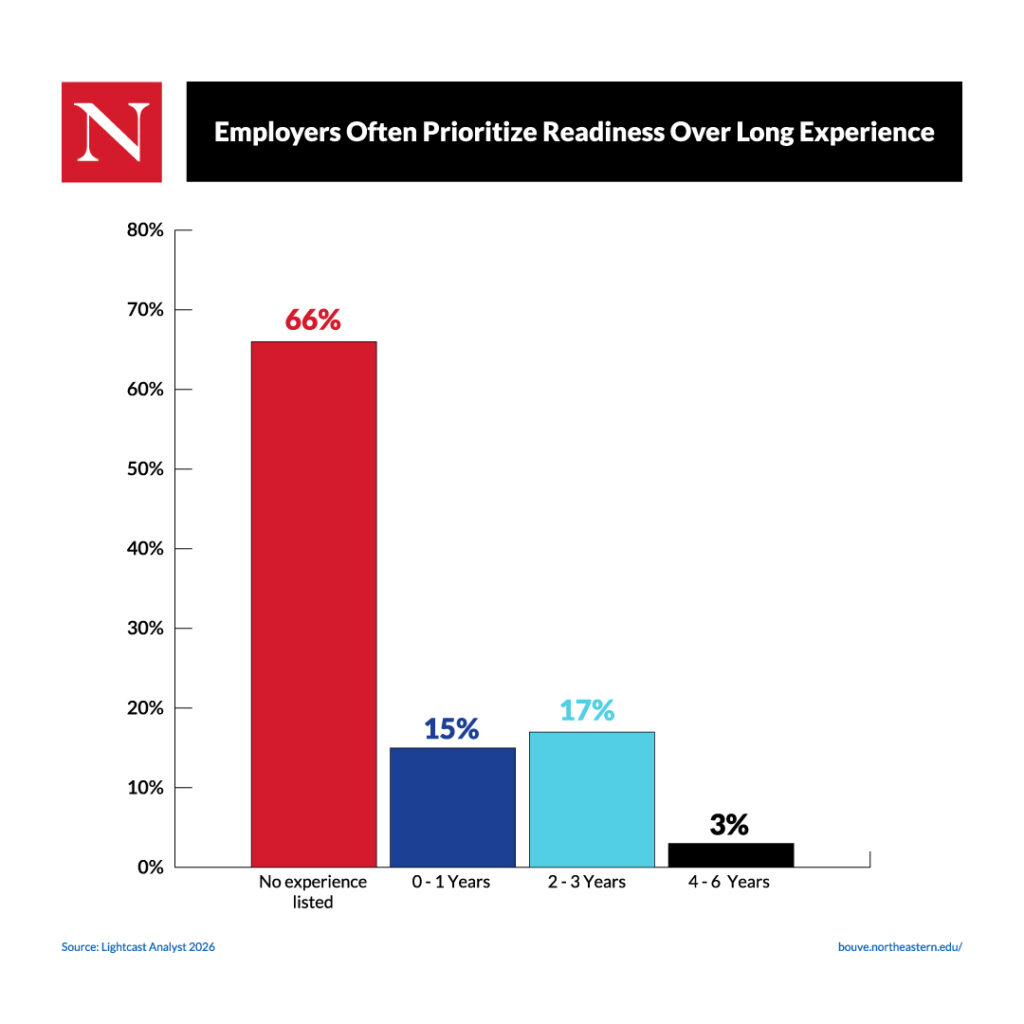
That matters in hiring because healthcare organizations do not operate in static conditions. Patient needs change. Teams change. Clinical priorities change. Employers benefit from hiring graduates who are prepared for broad practice, who can function in team-based care, and who can grow into new settings over time.
How PA Programs Build Job Readiness Before Graduation
Employer value doesn’t just appear automatically at the end of a master’s program. It is built into the structure of the training itself.
In a strong PA program, job readiness develops through three connected parts of the learning experience:
- Didactic coursework, which builds medical knowledge and diagnostic reasoning
- Simulation-based learning, which allows students to practice clinical thinking and communication before treating real patients
- Clinical rotations, which test those skills in real patient-care settings
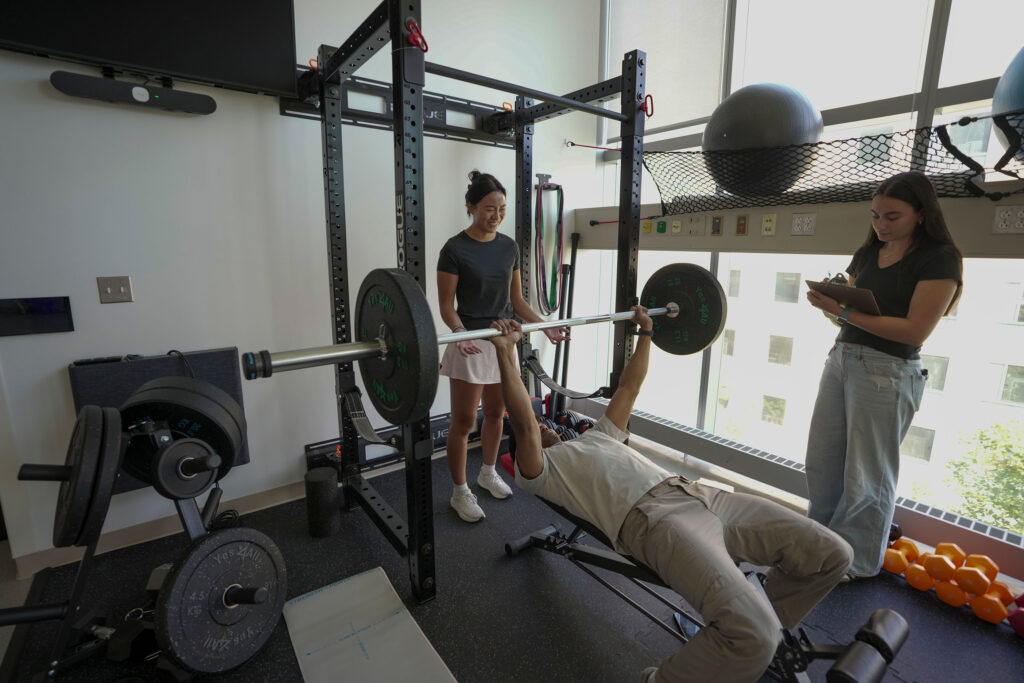
Northeastern University’s Physician Assistant (MS) program, for instance, for instance, includes not only classroom instruction, but also small-group learning and simulation lab exercises, including interdisciplinary cases with students from other health science programs. Through the Arnold S. Goldstein Simulation Laboratory Suite, students can strengthen clinical reasoning, practice working across disciplines, and gain experience in scenarios that reflect real healthcare environments.
That kind of preparation matters to employers because it helps graduates enter the workforce having already practiced how to think through patient cases, communicate with care teams, and respond in clinical settings with greater confidence.
Why Clinical Rotations Often Make the Biggest Difference
The part of PA education that most directly affects employability is often clinical training.
Clinical rotations are where students move beyond classroom competence and begin to show whether they can function in patient-care environments. That includes technical application, but it also includes bedside manner, confidence, communication, time management, and the ability to work within a team.
“There are some skills that you just can’t teach in the classroom,” says Parente. “You can only experience them and develop them through one-on-one interactions with the patient.”
That is one reason clinical training matters so much to employers: it gives graduates a stronger opportunity to stand out.
At Northeastern, for instance, students rotate through areas such as ambulatory medicine, emergency medicine, family practice, medicine, mental health, women’s health, pediatrics, and surgery, with an elective rotation as well.
That wide range of exposure can give employers greater confidence that a new PA will practice with humility, sound judgment, and increasing self-assurance.
What Northeastern’s PA Program Offers Employers
At Northeastern, preparation is built into the structure of the Physician Assistant, MS (Boston) program. It is a full-time, two-year graduate program offered on the Boston campus, and students complete 103 total semester hours to earn the degree. A capstone project and a summative examination are also included, giving students multiple points at which their readiness is assessed.
Several aspects of the program stand out:
- A long-established program: Northeastern has been training physician assistants since 1971, and its flagship PA program was the first generalist PA training program in the nation to offer a master’s degree in 1985.
- A broad, practice-oriented curriculum: The 103-semester-hour program includes coursework ranging from anatomy and physiology to women’s health and emergency medicine.
- Extensive supervised clinical education: Students complete clinical study in a wide range of areas, including ambulatory medicine and family practice. That range of rotations helps graduates enter the workforce with experience across multiple patient populations and care settings.
- A strong clinical environment: The program is located near Boston’s major academic medical centers, which strengthens students’ exposure to a mature healthcare ecosystem during training.
- A clear path to certification and licensure: The program prepares students for national certification and meets the educational requirements for professional licensure in all 50 states and Washington, DC.
The program is not just designed to move students through coursework quickly; it is designed to give them broad medical training, repeated clinical exposure, and a clear path toward practice readiness.
Employer Value Starts With Practice Readiness
Students evaluating PA programs are not only choosing a degree. They are choosing how well that degree will prepare them for the moment when employers begin asking whether they are ready.
Employers tend to look for a blend of clinical competence, communication, professionalism, adaptability, and comfort in team-based care. Strong programs help students build those qualities before graduation through coursework, simulation, and clinical experience.
Northeastern’s program is designed around that kind of preparation
Want to learn more about the program and whether it fits your goals? Explore the Physician Assistant (MS) program at Northeastern University’s Bouvé College of Health Sciences to learn more about the curriculum, clinical training, and next steps. Or you can request more information and get answers to any questions you might have.
Download Our Free Guide
Physician Assistant Career Guide
Take the first step toward a rewarding healthcare career. Download your free PA guide.