How long does it take to become a physician assistant?
For many students, the path takes about six or more years from the start of college through PA school, followed by certification and state licensure.That timeline usually includes a bachelor’s degree plus a full-time graduate PA program, though it can be longer if you need additional prerequisites, patient-care experience, or time between undergraduate study and applying to PA school.
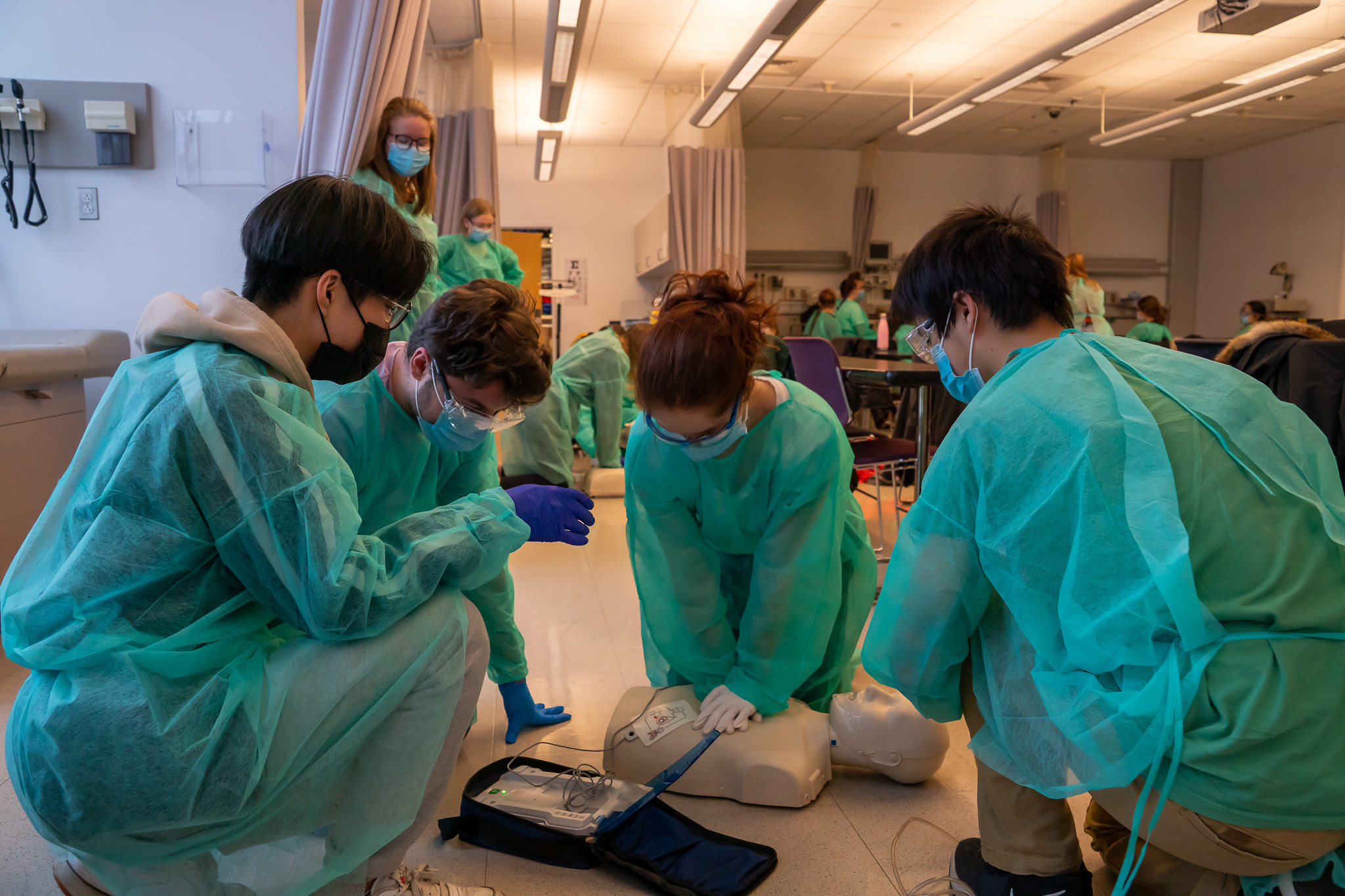
At Northeastern University’s Bouvé College of Health Sciences, the Physician Assistant (MS) program is structured as a full-time, two-year graduate program, which gives students a relatively direct route from foundational medical education into clinical training and, ultimately, practice.
How Long Does It Typically Take to Become a Physician Assistant?
For many prospective students, the most common version of the PA timeline looks like this:
- Four years for a bachelor’s degree
- Two years in a full-time PA master’s program
- Certification and licensure steps needed to begin practice
Northeastern’s Physician Assistant, MS (Boston), for instance, follows that graduate-school model as a full-time, two-year program.
That said, “about six years” is a starting point, not a rule that applies to every student. Some applicants move directly from college into PA school. Others take additional time to complete science prerequisites, gain direct patient-care experience, or strengthen their applications.
Because admissions requirements vary and some students need additional prerequisites or experience, the full timeline can differ from student to student.

Physician Assistant Career Guide
Start your PA journey. Grab the complete Physician Assistant Career Guide.
What Are the Main Steps in the PA Timeline?
The path is easier to understand when you break it into stages.
First comes undergraduate education. Students typically complete a bachelor’s degree and the science coursework required by the programs they plan to apply to.
Next comes application preparation, which may include direct patient-care or healthcare experience depending on the program.
Then comes PA school itself: students complete an accredited graduate program that includes classroom instruction, labs, and supervised clinical education.
After graduation, they become eligible to take the Physician Assistant National Certifying Exam (PANCE). NCCPA states that individuals who graduate from an ARC-PA accredited PA program can pursue certification through PANCE, and certification is then used for state licensure.
That progression is one reason the PA path often feels more straightforward than other clinical routes, even though it remains rigorous.
How Long Is PA School?
For students who are already thinking past college, the graduate portion of the timeline is the most concrete part to estimate.
The full-time, two-year Northeastern Physician Assistant, MS, program is divided between didactic instruction and clinical training rather than spread across a flexible, part-time format.
The curriculum reflects that intensity. Coursework includes:
- Anatomy and Physiology
- Clinical Lab and Diagnostic Methods
- Physical Diagnosis and Patient Evaluation
- Pharmacology
- Principles of Medicine
- Clinical Neurology
- Pediatrics
- Surgery
- Emergency Medicine and Critical Care
Those two years are packed with both foundational science and clinically-focused coursework. Once students are admitted and ready to begin, the program is designed to move them through a clearly sequenced path toward practice.
What Can Change the Timeline?
Even though PA school itself may take about two years, several factors can make the full path longer.
One common variable is prerequisite coursework. Students who did not complete the required science courses as undergraduates may need extra semesters before they are ready to apply. Another is healthcare experience. Many prospective PA students spend time working in clinical or patient-facing roles to strengthen their applications and gain exposure to the profession.
Career changers often have the most non-linear timelines. A student coming from a different professional background may need both science prerequisites and patient-care experience before becoming a competitive applicant. Gap years can also lengthen the path, whether they are used for work, preparation, or simply deciding whether the profession is the right fit.
Financial planning can also affect timing, especially for students deciding when they can realistically return to school.
That does not mean a nontraditional path is a disadvantage. It simply means “how many years does it take to become a PA?” often depends as much on the student’s starting point as on the graduate program itself.
How Does the PA Timeline Compare With Medical School?
Many students are likely to compare the PA timeline with another familiar healthcare path: becoming a physician.
The PA route is typically shorter because it does not require four years of medical school followed by three to seven years of residency. Instead, students complete undergraduate preparation, a graduate PA program, and then move into certification and licensure.
That difference in time-to-practice is one of the reasons the PA role appeals to students who want to work in medicine but do not want the longer physician training route.
That shorter timeline does not mean the profession is less serious or less clinically demanding. Jason Parente, PA-C, a practicing physician assistant and PA program director at Northeastern, emphasizes that students need to understand what they are signing up for. The program offers a quicker path into practice than medical school, but it is still rigorous and demands support, planning, and balance.
PAs are educated broadly in the medical model and prepared for team-based practice across a wide range of settings and specialties. Northeastern emphasizes that graduates are trained to diagnose illness, develop treatment plans, prescribe medications, and work collaboratively across medical specialties.
What Makes Northeastern’s PA Program Stand Out?
Many PA programs can get students from classroom learning to graduation in about two years. What matters is how that time is structured, and what students gain from it.
At Northeastern University’s Bouvé College of Health Sciences Physician Assistant (MS) program, the differentiator is not simply speed. It’s the combination of a focused, full-time format with long-standing program history, simulation-based learning, and access to Boston’s healthcare environment.
Several features stand out:
- A long-established PA program: Northeastern’s flagship PA program was established in 1971 and was the first generalist PA training program in the nation to offer a master’s degree in 1985. That history reflects decades of experience preparing students for physician assistant practice.
- A Boston clinical environment: The program is located near Boston’s major academic medical centers, giving students access to one of the country’s strongest healthcare ecosystems during training.
- Simulation built into training: Through the Arnold S. Goldstein Simulation Laboratory Suite, students can strengthen clinical reasoning, patient communication, and interprofessional skills in realistic practice settings before and alongside clinical rotations.
- A program designed for practice readiness: Because the curriculum is full-time and sequential, students move through didactic study, hands-on skills development, and clinical training in a way that is designed to support a relatively direct transition into patient care.
For prospective students, that means Northeastern’s timeline is built to be intensive, practice-oriented, and supported by a mature healthcare training environment.
Is the PA Timeline Right for You?
For many students, the path to becoming a physician assistant hits a meaningful balance: it is demanding, but relatively efficient; it leads into clinical practice, but does not require the same training length as the physician route.
If you want a relatively direct path into patient care, Northeastern’s Physician Assistant (MS) program is designed to help students move from academic preparation into clinical care.
Want to learn more about the program and whether it fits your goals? Explore the Physician Assistant (MS) program at Northeastern University’s Bouvé College of Health Sciences.
Have further questions? Request more information and get answers you’re looking for.
Download Our Free Guide
Physician Assistant Career Guide
Take the first step toward a rewarding healthcare career. Download your free PA guide.