
Choosing a graduate program in healthcare often comes down to one fundamental question: Is it worth it?
For students considering a Master of Science in Physician Assistant Studies, that question involves weighing several factors—career impact, earning potential, job stability, and the time required to complete the degree
The good news is that physician assistants (PAs) consistently rank among the most rewarding and in-demand healthcare careers in the United States. For many students, becoming a PA offers a path to practicing medicine, building meaningful patient relationships, and entering the workforce sooner than traditional medical training allows.
But like any graduate degree, becoming a physician assistant requires careful consideration. Understanding what the career entails and what the degree prepares you for, can help you decide whether it aligns with your goals.
Here, we’ll take a closer look at what draws people to becoming a PA, what the future of the profession looks like, and how programs—such as the Northeastern University Bouvé College of Health Sciences Physician Assistant (MS) program—prepare students to take the first step into their PA career.
What Does a Physician Assistant Do?
Physician assistants are licensed healthcare professionals who diagnose illnesses, develop treatment plans, prescribe medications, and assist in medical procedures. They work closely with physicians and other healthcare professionals as part of a collaborative care team.
In many clinical settings, PAs perform many of the same core responsibilities as physicians:
- Conducting patient exams
- Ordering tests
- Interpreting results
- Helping manage ongoing care
According to Jason Parente, PA-C, a practicing physician assistant and faculty member in Northeastern University’s physician assistant program, the profession offers an opportunity to be deeply involved in patient care.
“Physician assistants are integrated into all aspects of healthcare,” Parente explains, “from physical examinations and diagnosis to prescriptions and procedures.”
This level of clinical responsibility is one reason the profession appeals to students interested in medicine but looking for an alternative to the traditional medical school route. Graduates from accredited programs—such as Northeastern—are then eligible to take the Physician Assistant National Certifying Exam (PANCE) and pursue state licensure.

Physician Assistant Career Guide
Start your PA journey. Grab the complete Physician Assistant Career Guide.


Why Many Students Consider the PA Career Path
For many aspiring clinicians, the appeal of becoming a physician assistant lies in the ability to practice medicine while maintaining flexibility and balance in their careers.
Parente notes that defining whether the profession is “worth it” depends largely on what someone values in a career. “It requires internal reflection. If your goal is to take care of patients and be in a profession where you care for people, it is absolutely worth it.”
National career rankings often support this perspective. Physician assistants frequently appear near the top of lists ranking the best healthcare jobs and overall careers in the United States.
Several factors contribute to this reputation:
- The opportunity to work directly with patients
- Strong job demand across healthcare settings
- Competitive salaries
- Career flexibility across medical specialties
For students who want to make a tangible impact in patients’ lives, these factors often outweigh other considerations.
Job Outlook for Physician Assistants
One of the clearest indicators of the value of a graduate degree is the demand for professionals in that field.
The outlook for physician assistants is exceptionally strong. The U.S. Bureau of Labor Statistics projects the profession will grow 20 percent between 2024 and 2034, much faster than the average for all occupations.
Data from the NCCPA Statistical Profile of Board Certified PAs also highlights the continued expansion of the profession, showing that, between 2013 and 2023 there was a 75% increase in the number of board certified physician assistants practicing in the field.
This growth is driven by several factors:
- An aging population requiring more medical care
- Increased prevalence of chronic diseases
- Expanding healthcare teams that rely on physician assistants to deliver patient care
Healthcare systems increasingly depend on team-based care models, where physicians, physician assistants, nurse practitioners, and other professionals work together to improve patient outcomes.
Because PAs can diagnose conditions, prescribe treatment, and assist with procedures, they play a critical role in helping healthcare systems meet growing patient needs.
Salary Potential for Physician Assistants
In addition to strong job demand, physician assistants benefit from competitive salaries. The Bureau of Labor Statistics reports a median annual salary of approximately $133,260 for physician assistants.
While compensation varies depending on specialty, experience, and geographic location, the profession offers significant earning potential relative to the time required to enter the field. For many students, the ability to begin earning a competitive salary sooner than physicians—who must complete medical school and residency training—can make the PA path financially appealing.

Career Flexibility Is a Major Advantage
One of the defining characteristics of the physician assistant profession is career mobility.
Unlike physicians, who typically complete residency training in a specific specialty, physician assistants are trained as generalists. This allows them to move between specialties throughout their careers.
Parente describes this as “lateral mobility,” a concept central to PA training.
“Flexibility and adaptability are key,” he says. “This profession is built on…the ability to switch specialties without redoing your training.”
This flexibility allows PAs to pursue opportunities in many areas of medicine, including:
- Primary care
- Emergency medicine
- Surgery
- Cardiology
- Orthopedics
- Dermatology
- Pediatrics
More than half of physician assistants report changing specialties during their careers, according to national workforce data. For students who want the ability to evolve professionally or explore different areas of medicine, this flexibility can be a major benefit.
What to Expect from a Physician Assistant Master’s Program
While the long-term rewards of becoming a physician assistant can be significant, the journey requires dedication and rigorous training.
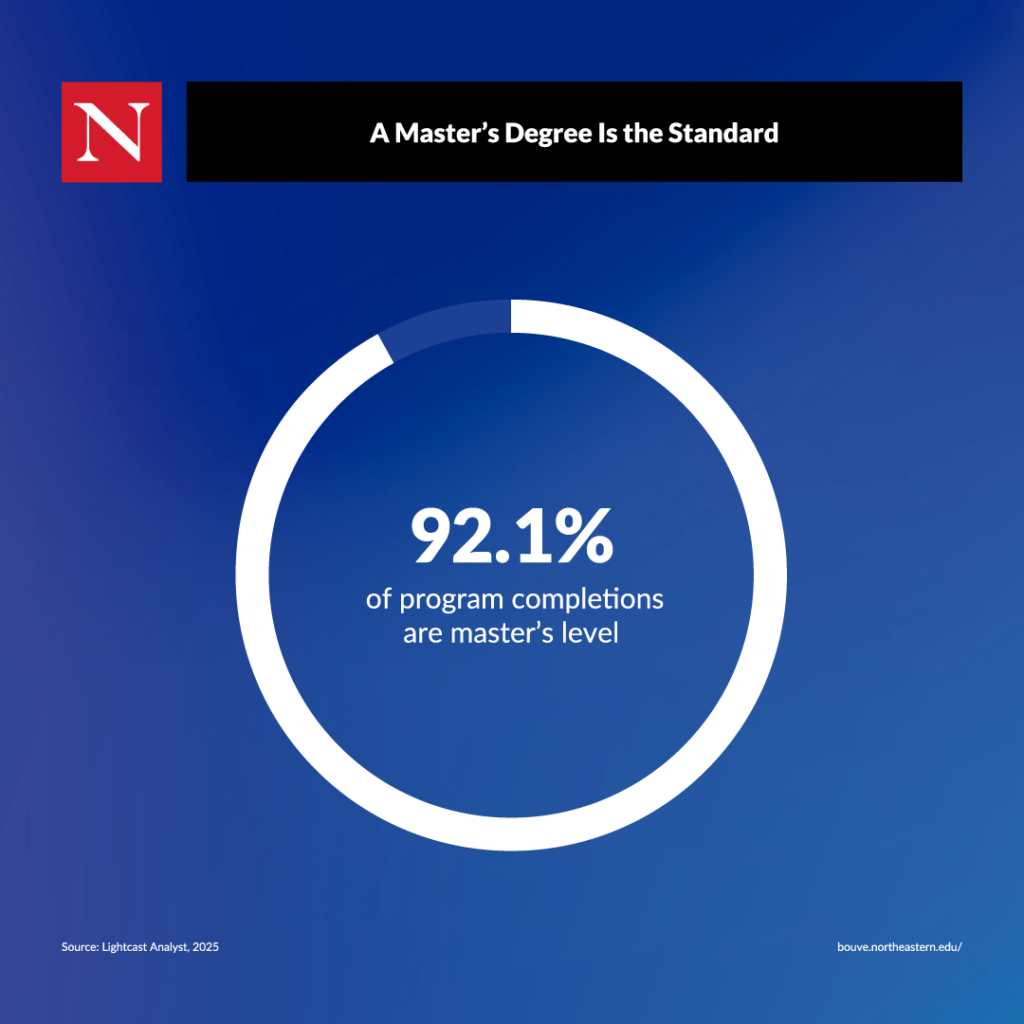
Most physician assistant programs lead to a Master of Science in Physician Assistant Studies and combine classroom instruction with extensive clinical education. Students typically study subjects such as anatomy, pharmacology, clinical medicine, diagnostic reasoning, and patient care practices.
But the most important preparation comes from hands-on clinical training that allows students to apply what they learn in real healthcare settings.
Classroom Learning Builds the Clinical Foundation
The first portion of most physician assistant programs focuses on foundational medical knowledge.
Students in programs such as Northeastern University’s Bouvé College of Health Sciences Physician Assistant (MS) program build a strong foundation in the medical sciences before beginning clinical training.
Coursework often includes:
- Human anatomy and physiology
- Pharmacology
- Pathophysiology
- Clinical medicine
- Diagnostic methods
This academic training helps students build the knowledge base needed to evaluate patients and develop treatment plans.
However, classroom learning alone isn’t enough to prepare someone for a clinical career. As Parente explains, the real lessons often emerge when students begin interacting with patients.
“It’s one thing to read a textbook,” he says. “It’s another to realize how delicate life can be when you’re standing in front of a patient.”
Simulation and Technology Are Changing PA Education
Modern physician assistant programs increasingly incorporate simulation-based training so students can practice complex clinical scenarios before entering real patient settings. At Northeastern, students train in advanced simulation environments designed to recreate real clinical situations.
These simulation centers allow students to work through diagnostic challenges, emergency situations, and patient interactions using high-fidelity mannequins or trained actors portraying patients.
Programs are also beginning to introduce emerging technologies that are shaping the future of healthcare. Many programs now incorporate tools such as point-of-care ultrasound and advanced diagnostic technology, helping students build familiarity with innovations they may encounter in clinical practice.
“The biggest challenge for all of medicine over the next five to 10 years will be artificial intelligence,” Parente says, with many healthcare systems already experimenting with AI-powered tools that help summarize patient records, assist with clinical documentation, or flag potential diagnostic concerns in medical imaging.
Training in Boston Expands Clinical Opportunities
Where a physician assistant program is located can significantly influence the range of clinical experiences available to students.
Boston is widely recognized as one of the leading healthcare hubs in the United States, home to numerous academic medical centers and specialized hospitals.
Students in Northeastern’s PA program benefit from this environment through clinical training opportunities across the region. “Boston has some of the leading academic medical centers in the world,” Parente explains. “We have six Level 1 trauma centers within the city—some cities only have one.”
Because Northeastern’s program has been established for more than 50 years, it maintains long-standing partnerships with hospitals and healthcare organizations throughout the region.
These connections allow students to experience a variety of clinical environments—from large academic hospitals to community-based care settings—while working with diverse patient populations.

Is a Physician Assistant Master’s Degree Worth It for You?
For many students, becoming a physician assistant is worth it because the profession offers strong job growth, competitive salaries, and the ability to practice medicine after a relatively short graduate program.
Students considering a PA career should think about questions such as:
- Do you want a career focused on patient care and helping people navigate complex health challenges?
- Are you comfortable completing an intensive graduate program that combines classroom learning with hands-on clinical training?
- Do you value flexibility in your long-term career path, including the ability to move between medical specialties?
For individuals motivated by patient care and meaningful interactions with others, the profession can be deeply fulfilling.
Programs like the Physician Assistant (MS) program at Northeastern University’s Bouvé College of Health Sciences combine rigorous academic preparation with extensive clinical experience to prepare graduates for careers in patient care.
Students benefit from training in advanced simulation environments; clinical rotations across Boston’s major healthcare institutions; and exposure to emerging healthcare technologies.
Want to learn more about becoming a physician assistant? Request more information and get answers to the questions you might have.
Download Our Free Guide
Physician Assistant Career Guide
Take the first step toward a rewarding healthcare career. Download your free PA guide.