
If you’ve been hearing more about cannabis in the news over the last few years, you might be wondering what it actually means to study it from a scientific perspective—and whether your background could apply.
What is cannabis science, exactly? Is it just about growing the plant, or does it involve lab work, medicine, or product development? And is a career in this field realistically viable?
At its core, cannabis science is the interdisciplinary study of cannabis, cannabinoids, and cannabis-derived products through fields such as biology, chemistry, pharmacology, medicine, product testing, quality control, regulation, and product development. It goes beyond cannabis business, retail, or cultivation alone and is especially relevant for science-trained students and professionals who want to apply their skills in a new and evolving industry.
Legal markets, medical cannabis programs, hemp-derived products, testing laboratories, state regulations, product innovation, and clinical research have all created demand for people who understand cannabis through a more rigorous scientific lens.
What Is Cannabis Science?
Cannabis science is the study of the cannabis plant, its active compounds, its effects on the human body, and the products, regulations, and safety standards that shape the industry around it. It includes scientific questions such as:
- How do cannabinoids interact with the body?
- How are cannabis products tested for potency and contaminants?
- What makes one formulation different from another?
- How should product quality be measured?
- What does clinical evidence show, and where is more research needed?
Miyabe Shields, PhD, a Northeastern University graduate, cannabis science educator, and structural biochemist by training who will be teaching in the Northeastern University’s Graduate Certificate in Cannabis Science program, describes the field as wide-ranging.
“Cannabis science is super broad,” Shields says. “It is everything from seed to sale, and there’s a scientific component in pretty much every place.”
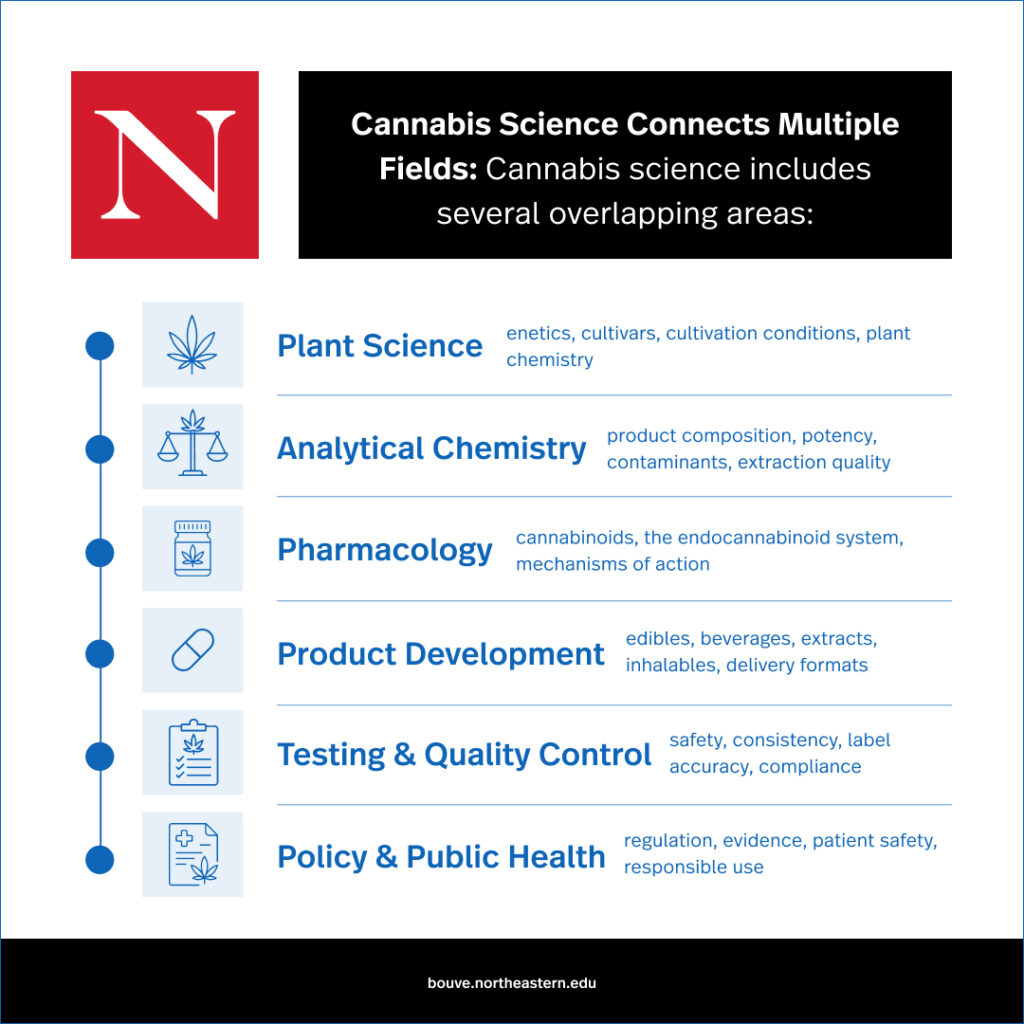
That breadth is what can make the field difficult to define at first. Cannabis science may begin with the plant, but it does not stop there. It can include genetics, cultivation science, extraction, analytical chemistry, formulation, toxicology, smoke chemistry, quality control, medical cannabis research, public health, policy, and compliance.
It also exists in a field where the legal and scientific landscape continues to change. The FDA notes that it supports sound, scientifically based research into cannabis and cannabis-derived compounds, but it has not approved cannabis as a general treatment for any disease or condition. The agency has approved one cannabis-derived drug product and three cannabis-related drug products, reinforcing the need for medical and therapeutic claims to be evidence-based and carefully framed.
In other words, cannabis science is not simply about knowing cannabis products. It is about understanding what is known, what remains uncertain, how evidence is evaluated, and how science can improve safety, quality, and responsible innovation.
What Fields Does Cannabis Science Include?
Because cannabis science sits at the intersection of several disciplines, it can look different depending on where someone works. For instance, someone working in a testing lab may focus on analytical chemistry and quality control, while a professional in product development will likely be thinking about formulation, delivery method, and consumer safety.
Here are several of the major fields cannabis science can include.
Cannabis Biology and Plant Science
Cannabis science can begin with the plant itself. This includes botany, plant genetics, cultivars, cultivation conditions, plant chemistry, and the biological factors that affect product composition.
The plant’s genetics, growing conditions, harvesting, drying, curing, and processing can all influence the chemical profile of the final product.
Shields notes that scientific work around the plant can involve genetics, cultivars, PCR, elemental analysis, pesticide identification, and other techniques used to understand plant material and production conditions.
Cannabis Chemistry and Analytical Science
Cannabis products contain cannabinoids, terpenes, and other chemical constituents that can vary by plant, product type, extraction method, formulation, and storage conditions. This makes chemistry central to cannabis science.
Analytical science helps professionals understand what is in a cannabis product and whether the product is consistent, accurately labeled, and free from certain contaminants. Shields points to techniques such as HPLC, LC-MS, NMR, mass spectrometry, elemental analysis, and pesticide identification as examples of methods used in the field.
These methods may be used to evaluate:
- Cannabinoid potency
- Cannabinoid profiles
- Product consistency
- Residual contaminants
- Extraction quality
- Formulation performance
- Label accuracy
This is one reason cannabis science is more technical than general cannabis education—it requires a scientific understanding of measurement, methods, limitations, and data quality.
Pharmacology and the Endocannabinoid System
Cannabis science also includes how cannabinoids interact with the human body. This is where pharmacology, physiology, and the endocannabinoid system become central.
The endocannabinoid system is a biological system involved in regulating several physiological processes. Cannabinoids can interact with this system in different ways, which is one reason researchers study their potential therapeutic effects, risks, and mechanisms of action.
Shields’ own scientific background is in drug discovery in the endocannabinoid system. They studied cannabinoids and the molecular mechanisms that contribute to therapeutic effects, a perspective that reflects the more rigorous biomedical side of cannabis science.
For students interested in medical cannabis, this area is especially important. However, it also requires caution. Evidence varies depending on the condition, product type, dose, cannabinoid profile, route of administration, and patient population. Professionals in this space need to understand both potential applications and scientific limitations.
Product Development and Formulation
Cannabis science also applies to the development of cannabis-derived products. These may include edibles, beverages, inhalable products, extracts, topicals, formulations, and other delivery formats.
Once cannabis moves beyond cultivation and extraction, product development can overlap with food science, pharmaceutical science, toxicology, chemistry, smoke science, and consumer safety. For example, a cannabis beverage raises different scientific questions than an inhalable product.
Product developers may need to consider stability, bioavailability, onset time, dose consistency, product matrix, shelf life, contaminants, labeling, and consumer expectations. In a more mature and regulated market, these scientific considerations become increasingly important.
Testing, Quality Control, and Compliance
Testing is one of the clearest examples of why cannabis science matters.
Legal cannabis markets rely on testing laboratories to evaluate products for potency, contaminants, and quality-related characteristics. Testing can include cannabinoids such as THC and CBD, microbial contamination, pesticides, heavy metals or toxic elements, moisture, and other factors that affect product safety and consistency.
The National Institute of Standards and Technology’s Cannabis Laboratory Quality Assurance Program, or CannaQAP, was created to help cannabis testing laboratories improve measurement comparability and competence. One CannaQAP exercise focused on cannabinoids, moisture, and toxic elements such as arsenic, cadmium, lead, mercury, and other elements—an example of how measurement, quality, and safety challenges go beyond THC.
Cannabis compliance also varies widely by state. The National Conference of State Legislatures tracks state medical and adult-use cannabis laws, showing how much regulation can differ across jurisdictions.
For science-trained professionals, this means regulatory literacy can be just as important as technical knowledge, as a product that meets one state’s requirements may face different scrutiny in another.
Medical Cannabis Research and Public Health
Cannabis science also includes research into potential medical uses, health risks, patient safety, and public health implications.
This area requires a balanced, evidence-based approach. Cannabis may have therapeutic potential in certain contexts, but professionals need to understand how evidence is generated, where evidence is strong, where it is limited, and how to communicate responsibly with patients, consumers, policymakers, or industry stakeholders.
The FDA’s cannabis research and drug approval guidance distinguishes between research into cannabis-derived compounds and the sale of unapproved products. That distinction is important for anyone entering cannabis science as it requires scientific literacy, clinical caution, regulatory awareness, and a commitment to patient safety.
Policy, Law, and Ethics
Cannabis science does not exist apart from law and policy. State-by-state legalization, federal regulation, hemp rules, testing requirements, product standards, and medical cannabis laws all shape what professionals can do and how cannabis products are produced, studied, sold, and used.
Northeastern’s Graduate Certificate in Cannabis Science, for instance, includes cannabis history, business, law, and policy alongside the chemical, biochemical, pharmacological, scientific, health, and therapeutic aspects of cannabis within its curriculum.
The field also raises ethical questions around patient access, consumer safety, health claims, product quality, equity, commercialization, public health, and responsible communication.
How Is Cannabis Science Different From Cannabis Business, Retail, or Cultivation?
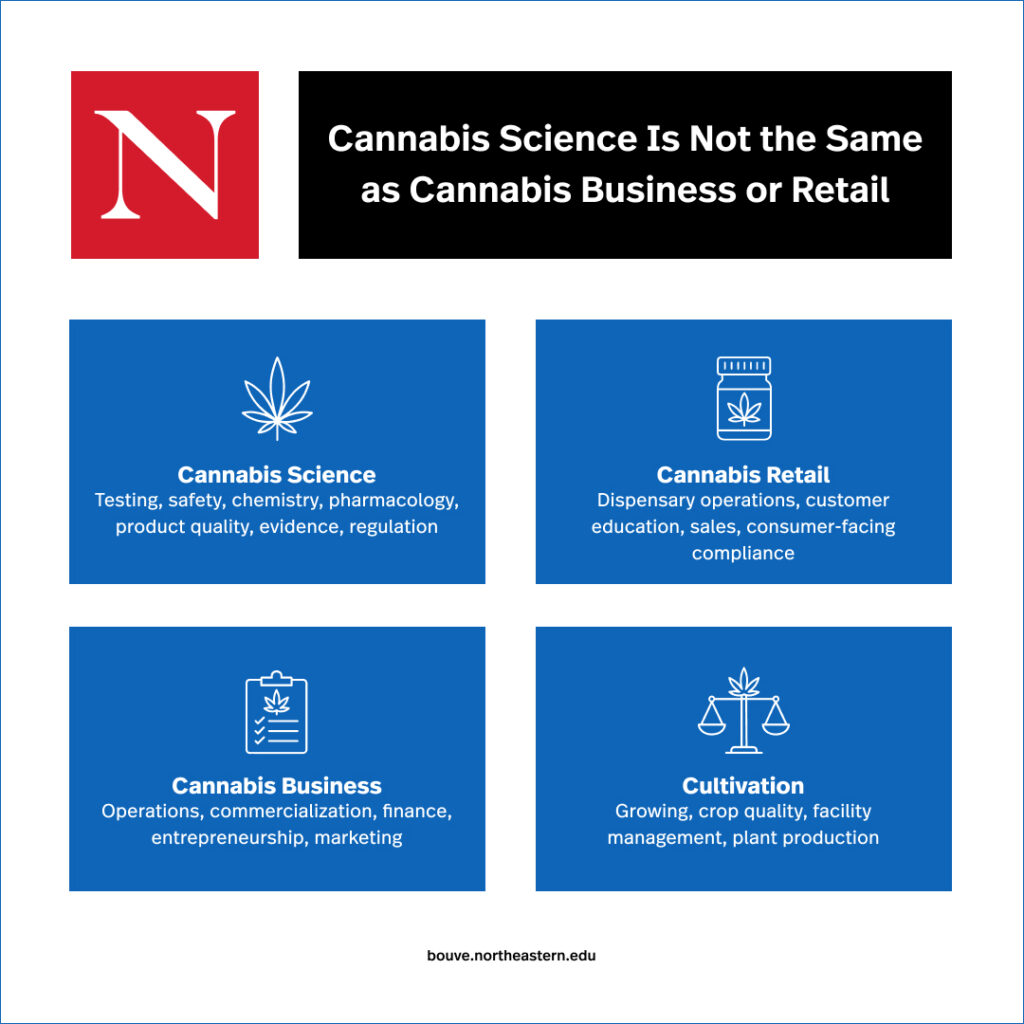
Cannabis science is a part of the cannabis industry as a whole, but it is distinctly different from cannabis business, retail, or cultivation.
Cannabis business often focuses on commercialization, operations, entrepreneurship, finance, marketing, retail strategy, and management. Cannabis retail focuses on dispensary operations, customer education, product sales, and consumer-facing compliance. Cultivation focuses on growing the plant, managing facilities, improving crop quality, and optimizing production.
Cannabis science asks a different set of questions:
- How do cannabis products work?
- How are they tested?
- What does the evidence show?
- How can products be made safer, more consistent, and more reliable?
- How do cannabinoids interact with the body?
- How should professionals think about quality, regulation, and responsible innovation?
There is certainly some overlap among these areas. For example, a cannabis executive may need enough science literacy to make informed product decisions, or it might be necessary for a cultivation professional to understand plant chemistry and testing requirements.
But cannabis science is the discipline that brings scientific rigor to those decisions.
What Skills Matter in Cannabis Science?
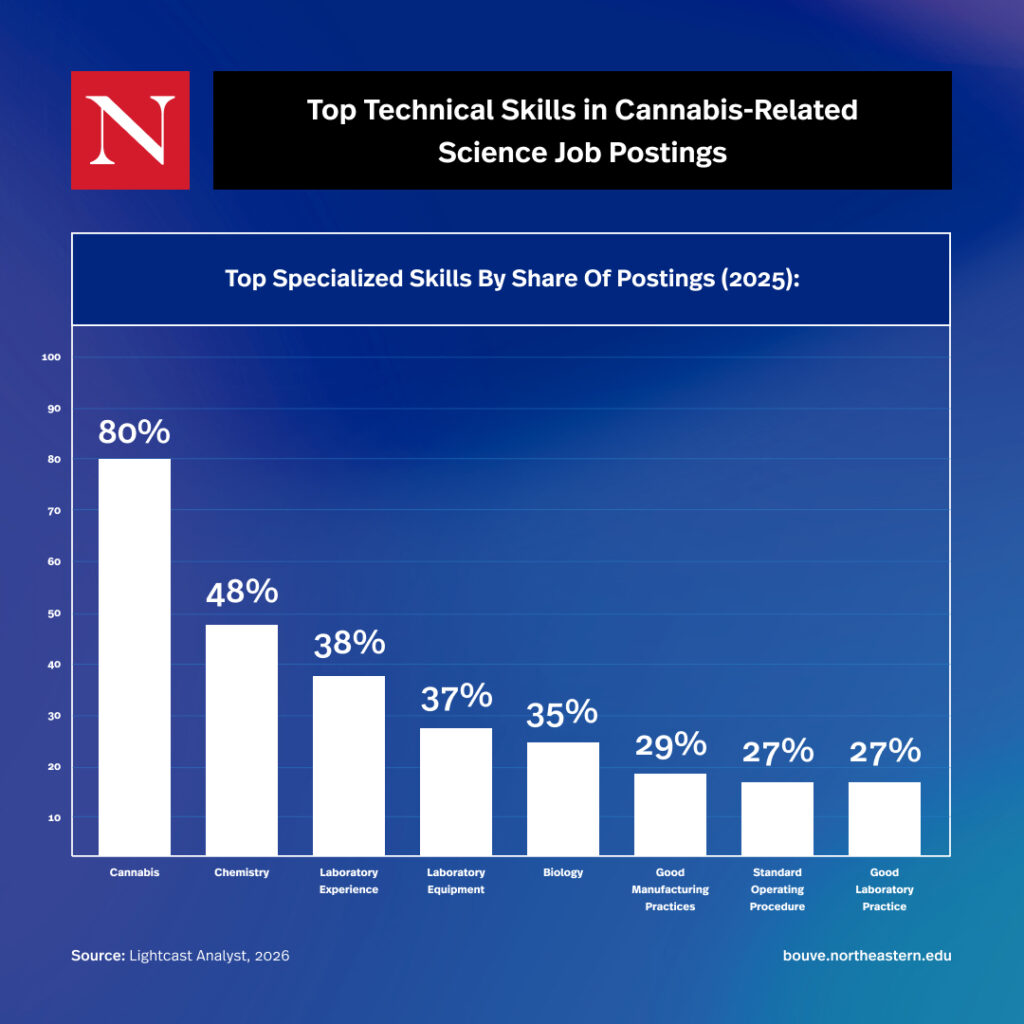
Cannabis science can be a strong fit for people with backgrounds in biology, chemistry, pharmaceutical sciences, health sciences, biomedical sciences, lab sciences, public health, or related fields. But the field also requires a specific combination of technical, analytical, and communication skills.
Scientific Literacy
Scientific literacy is one of the most important skills in cannabis science. Professionals need to evaluate evidence, understand limitations, distinguish between research and anecdote, and recognize when claims go beyond what the data supports.
Shields says formal science training helps professionals understand the difference between community knowledge, informal claims, and scientific evidence.
“A formal training in the sciences helps you understand the technical aspect of things that we didn’t apply to cannabis until the last 20 years,” they say.
Analytical and Laboratory Skills
Cannabis testing, product analysis, quality control, and research all rely on laboratory methods and measurement reliability. Professionals may not need to personally run every method, but they may need to understand what different techniques measure, where they are used, and what their limitations are.
This is especially relevant for testing labs, product development teams, compliance teams, and quality assurance roles.
Chemistry and Pharmacology Knowledge
Understanding cannabinoids, terpenes, product composition, bioactivity, formulation, and the endocannabinoid system can help professionals make more informed decisions in medical cannabis, product development, research, and education.
Chemistry and pharmacology also help professionals evaluate why different products may have different effects, why delivery format matters, and why evidence must be tied to specific compounds, doses, and populations.
Regulatory and Compliance Awareness
Cannabis is heavily shaped by regulation. Because state rules vary and federal policy continues to evolve, professionals need to understand how law and regulation affect product testing, labeling, distribution, medical use, research, and commercialization.
For people working in scientific or technical roles, this awareness can help connect laboratory work to real-world requirements.
Critical Thinking and Data Analysis
Cannabis science is an emerging field, which means professionals often work with incomplete evidence, changing regulations, inconsistent standards, and evolving technologies. Critical thinking and data analysis skills can help them identify gaps, interpret findings, solve problems, and make better decisions.
Communication Across Science, Business, and Policy
Cannabis science often sits between technical teams, regulators, operators, patients, consumers, product developers, and business leaders. Professionals who can translate scientific information into clear, accurate, decision-ready communication may be especially valuable.
This is one reason the field needs more than technical expertise alone. It needs people who can connect science to safety, quality, policy, product strategy, and public understanding.
What Career Paths Can Cannabis Science Support?
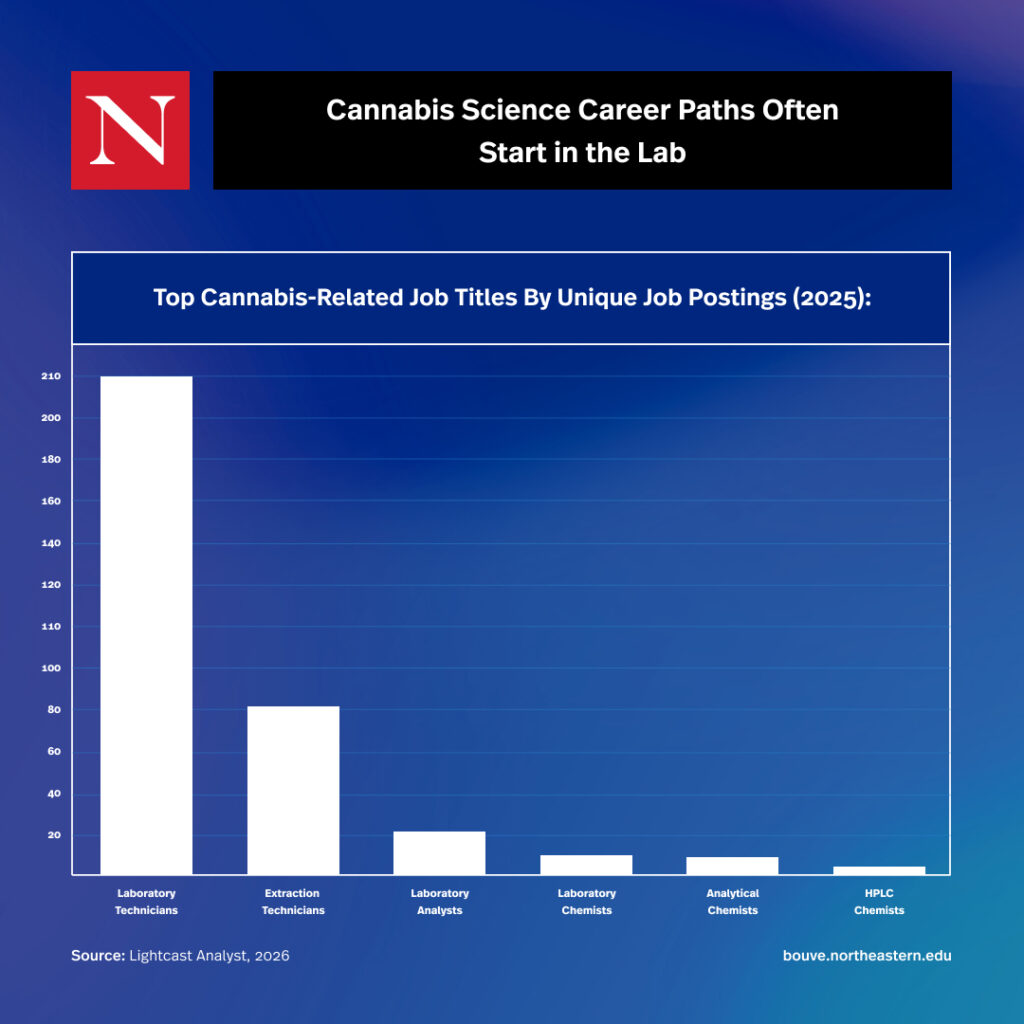
Cannabis science knowledge can be relevant to a range of pathways, though career options vary by market, employer, state regulations, and prior experience. A certificate alone does not guarantee employment, but graduate-level training can help science-trained learners build knowledge that may support movement into more technical or specialized areas.
Potential areas where cannabis science knowledge can apply include:
- Cannabis testing laboratories
- Quality assurance and quality control
- Product development and formulation
- Extraction and processing science
- Medical cannabis education
- Cannabinoid research
- Regulatory affairs and compliance
- Policy and public health
- Product commercialization
- Industry leadership or consulting
- Science communication or education
Shields notes that people already working in cannabis—in operations, cultivation, processing, retail, or entry-level roles—may later want more options, making scientific training important for such career flexibility.
As Shields puts it, the industry needs “more people with that scientific background.”
Is Cannabis Science a Good Fit for You?
Cannabis science may be a strong fit if you have a science background and want to apply it to an emerging, interdisciplinary field. It may also appeal to professionals already working in cannabis who want to move beyond entry-level or operational roles into more technical, scientific, or leadership-oriented work.
If you are interested in:
- the intersection of science, health, policy, and product safety
- cannabis beyond consumer-level knowledge
- product testing and quality control
- cannabinoid pharmacology and the endocannabinoid system
- medical cannabis research and patient safety
- product development and formulation
- regulation, compliance, and public health
- a field where standards and career pathways are still developing
…then pursuing a career in cannabis science may be right for you.
It may be less aligned if you are only looking for a basic dispensary retail credential, a cultivation-only program, a purely business-focused cannabis entrepreneurship program, or a guaranteed career path. It may also be less appropriate if your goal is full-time academic research, which often requires a master’s degree, PhD, or other research-intensive pathway.
For science-trained learners who want a focused, flexible introduction to the field, however, a graduate certificate can offer a more structured way to build foundational knowledge.
Should You Explore Cannabis Science?
Cannabis science is broad, technical, evolving, and increasingly important. It brings scientific rigor to a field shaped by product innovation, medical interest, regulatory change, quality concerns, and public health questions.
For students and professionals with science backgrounds, it can provide a way to apply existing knowledge to an industry that still needs stronger standards, better evidence, more reliable testing, and clearer communication. For people already working in cannabis, it may provide a way to build more options and move toward more technical or specialized roles.
Northeastern’s Graduate Certificate in Cannabis Science is designed for students with a science background who want to understand cannabis through a graduate-level, science-forward lens. The 100% online program includes cannabis history, business, law, and policy, with a primary focus on the chemical, biochemical, pharmacological, scientific, health, and therapeutic aspects of cannabis.
Want to know more? Explore the Northeastern University’s Graduate Certificate in Cannabis Science to see how the program can help science-trained learners build foundational knowledge in this evolving field.