YOU ARE BOUVÉ

PLEASE NOTE: Beginning with the 2027-28 admissions cycle, we will not be accepting applicants for this program.
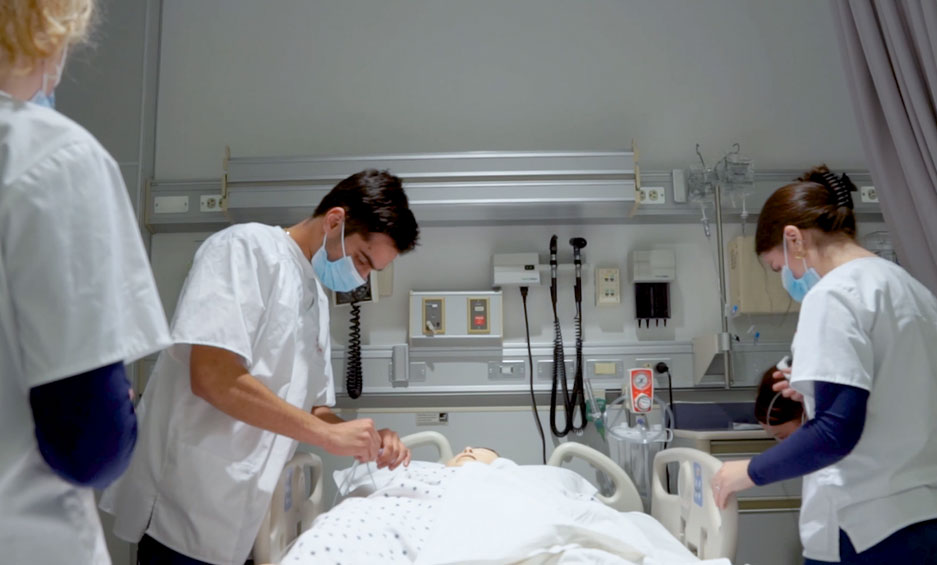
The Adult-Gerontology Primary Care Nurse Practitioner Program is a specialty track within the MS in Nursing program that prepares nurse practitioners to provide quality care to adults/older adults.
This specialty focuses on health promotion, disease prevention, and management of chronic and sub-acute conditions. The AGPCNP practices in a variety of settings, including primary care centers, disease-specific clinics, long-term care facilities, and inpatient specialty services. Although the name of the certification includes “primary care,” our program prepares students to excel in a wide range of fields and settings.

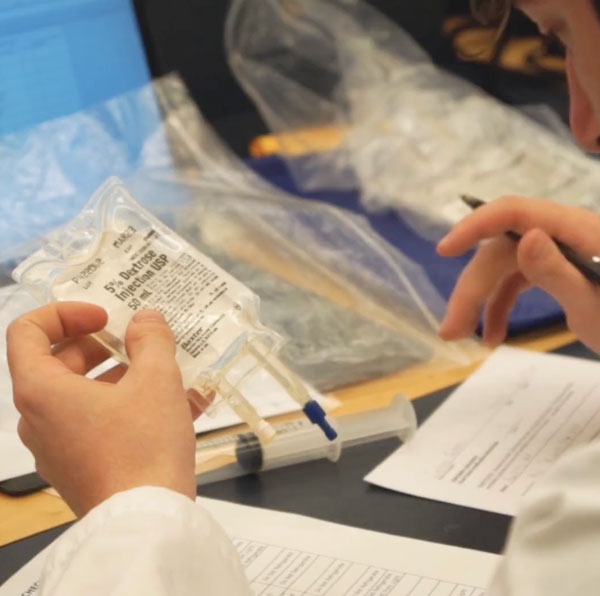
Our program is offered fully online, with a mix of synchronous and asynchronous* courses. This offers flexibility in completing coursework online while you attend your clinical rotations locally.
In addition to the traditional Master’s Primary Care Nursing program, we offer a Certificate of Advanced Graduate Study (CAGS) for nurses who possess an MS degree in Nursing with a nurse practitioner specialty.
Upon completion of the program, graduates are eligible to sit for either of the available AGPCNP national certification exams (ANCC or AANP).
The program prepares you to practice in any state, based on the information posted on each state’s nursing licensure website. If you have questions or concerns regarding professional licensure, please contact our program director Jacquie Tolosko.
*Asynchronous refers to a recorded class you can do in your own time, vs. synchronous which refers to courses that are attended at specific times.
Degree types:
– MS in Nursing
– Certificate of Advanced Graduate Studies
Study options:
– Primarily online
– Full-time or part-time
Modality:
Online Courses are offered in a combination of synchronous and asynchronous formats, with local in-person clinical experiences.
Application deadlines:
Fall: August 1
Spring: November 17
GRE: Not required
Tuition and Fees
Online courses are offered at a discounted rate. Students admitted to an online program will take all courses online at the discounted rate.
The graduate program at Northeastern University enables nurse practitioners to articulate a theoretical base for practice and recognize competencies necessary for the provision of healthcare to individuals, families, and communities.
Graduate preparation expands the comprehensiveness of the nurse practitioner role to include participation and use of research development, implementation of health policy, leadership, education, case management, and consultation.
The prelicensure programs at Northeastern University School of Nursing Boston campus are approved by the Massachusetts Board of Registration in Nursing.
Curriculum subject to change.
Once admitted, students will meet with their academic advisor and/or graduate program director to individualize their plan of study. For the most up-to-date information please refer to the university’s academic catalog.
Applicants to the Adult-Gerontology Primary Care Nurse Practitioner program must have a current US Nursing license for admission to the program. GRE scores are not required. Please note that all letters of recommendations and official transcripts must be submitted via the Northeastern University Application Portal.
Northeastern is currently able to accept applications from applicants living in the following states: Alaska, Arkansas, Colorado, Connecticut, Florida, Hawaii, Illinois, Indiana, Iowa, Kansas, Kentucky, Maine, Massachusetts, Michigan, Mississippi, Montana, New Jersey, New Mexico, North Carolina, Ohio, Rhode Island, South Carolina, Texas, Vermont, Virginia, West Virginia
To apply, applicants must also have the following:
Minimum GPA of 3.0, with grades of ‘B’ or better, is required in all nursing courses
Evidence of successful completion of a statistics course that includes probability theory and hypothesis testing, taken preferably within five years of entering the program, and definitely within 10 years of entering the program (and/or being actively engaged in QI/research projects).
Applicants who do not meet this requirement have two options:
Two letters of recommendation (academic or professional)
Curriculum vitae
Baccalaureate degree in nursing from an accredited program (a baccalaureate degree in another field will be considered at the discretion of the Program Director)
Current RN licensure
At least 1 year of active full-time nursing experience.
Letter of intent to study (Minimum 500 words)
Official transcript from baccalaureate program and all college coursework



You will apply your learning in a wide array of health care settings such as major teaching hospitals in Boston and Southern New England, rehabilitation hospitals, specialty clinics, occupational health centers, hospice facilities, Veterans Administration facilities, and university health centers. Our placements include Brigham and Women’s Hospital, Boston Medical Center, Dana-Farber Cancer Institute, Tufts-New England Medical Center and dozens more.
You will also learn how to provide care to people in their homes and communities through placements at the VNA Care Network, Boston Public Health Commission, Boston Healthcare for the Homeless, and many others. Your clinical rotations in hospital and community settings will equip you to pursue employment in any specialization after graduation.
Students are expected to actively participate in the clinical placement process by identifying potential preceptors and clinical sites, communicating with prospective preceptors, and collaborating with the program director and faculty throughout the process. The School of Nursing provides guidance and support throughout this process; however, successful placement requires timely student engagement and completion of required steps.