By Erin Kayata
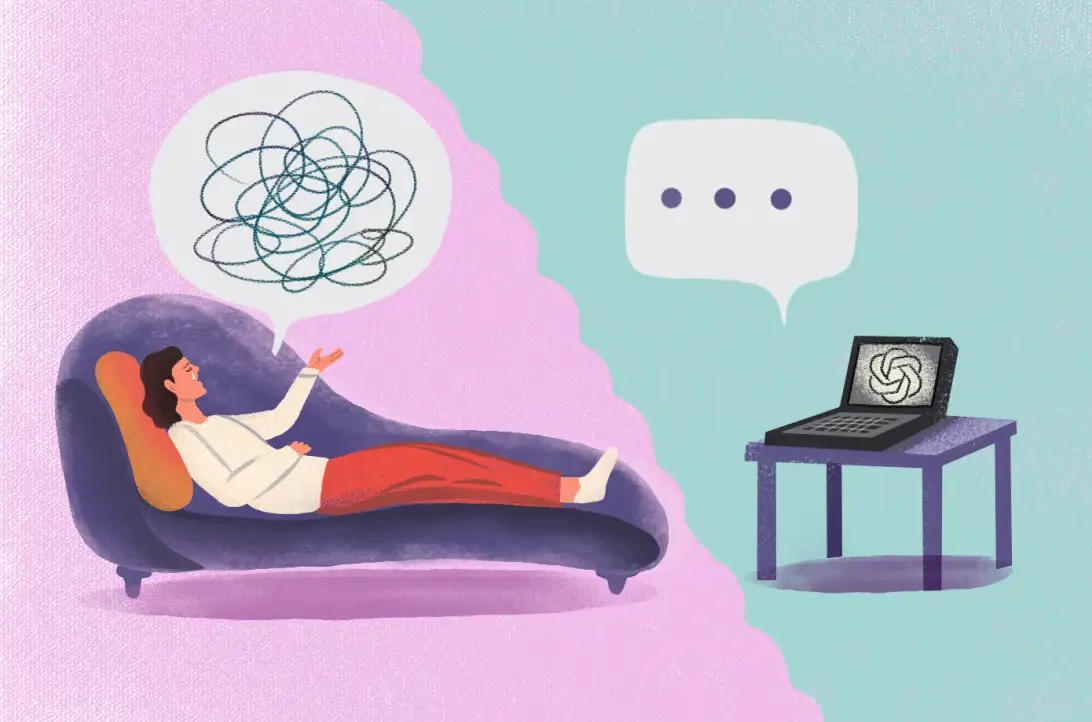
Sharing how you’re feeling can be frightening. Friends and family can judge, and therapists can be expensive and hard to come by, which is why some people are turning to ChatGPT for help with their mental health.
While some credit the AI service with saving their life, others say the lack of regulation around it can pose dangers. Psychology experts from Northeastern said there are safety and privacy issues posed by someone opening up to artificial intelligence chatbots like ChatGPT.
“AI is really exciting as a new tool that has a lot of promise, and I think there’s going to be a lot of applications for psychological service delivery,” says Jessica Hoffman, a professor of applied psychology at Northeastern University. “It’s exciting to see how things are unfolding and to explore the potential for supporting psychologists and mental health providers in our work.
“But when I think about the current state of affairs, I have significant concerns about the limits of ChatGPT for providing psychological services. There are real safety concerns that people need to be aware of. ChatGPT is not a trained therapist. It doesn’t abide by the legal and ethical obligations that mental health service providers are working with. I have concerns about safety and people’s well-being when they’re turning to ChatGPT as their sole provider.”