By Erin Kayata
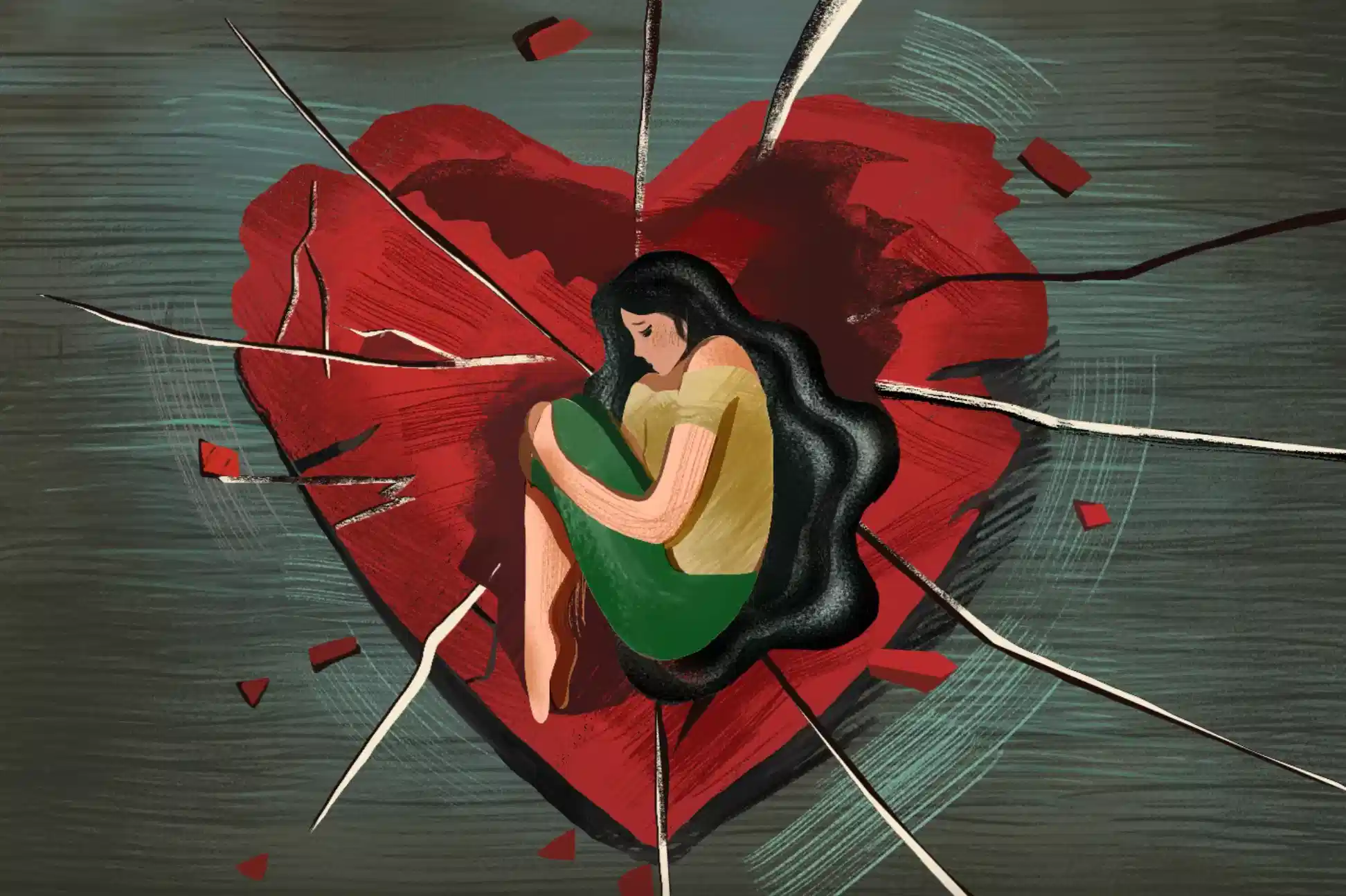
Everyone knows of a long-married couple that died just weeks or months apart or has seen headlines about a parent who dies shortly after losing their beloved child. Many chalk it up to a broken heart.
But can one actually suffer physically from emotional pain?
The heart can physically change in response to emotional distress, according to Northeastern University medical experts.
“Broken heart syndrome” is when the heart temporarily enlarges and doesn’t pump properly, leading to symptoms that mimic a heart attack. It is also known as stress cardiomyopathy, apical ballooning syndrome, or Takotsubo cardiomyopathy. It was first described by Japanese doctor Hikaru Sato and was recognized as a clinical syndrome in the 1990s.
“It’s this physical geometric change in the shape of the heart in response to a stressful event, be that an infection, trauma, death of a family member, or huge financial problem,” said Glenna Regan, director of didactic education and assistant clinical professor of medical sciences at Northeastern University. “A whole slew of things can cause a sudden acute stress response in the human body that can ultimately lead to the heart physically changing shape.”
In patients with broken heart syndrome, part of the heart’s ventricle contracts improperly, so it looks like an octopus trap, said Andrew Mackie, associate clinical professor of medical sciences at Northeastern University. This is where the syndrome gets its name, as takotsubo means octopus trap in Japanese.